
Table of Contents
- Is Low Acid Coffee Safe for Pregnancy? The Short Answer
- The Caffeine Limit During Pregnancy: What 200 Milligrams Looks Like
- How Low-Acid Coffee and Acid Reflux Interact in Pregnancy
- Decaf Coffee During Pregnancy: Does Removing Caffeine Remove the Risk?
- Coffee Alternatives During Pregnancy for a Gentler Morning Ritual
- What Pregnancy Guidance Gets Right and Where It Stays Vague
- Conclusion: Making a Confident Choice About Low Acid Coffee
- Frequently Asked Questions
Last Updated: October 5, 2026
Is Low Acid Coffee Safe for Pregnancy? The Short Answer
Low acid coffee is generally safe during pregnancy, but only if it keeps your total caffeine intake within the limit your doctor recommends.
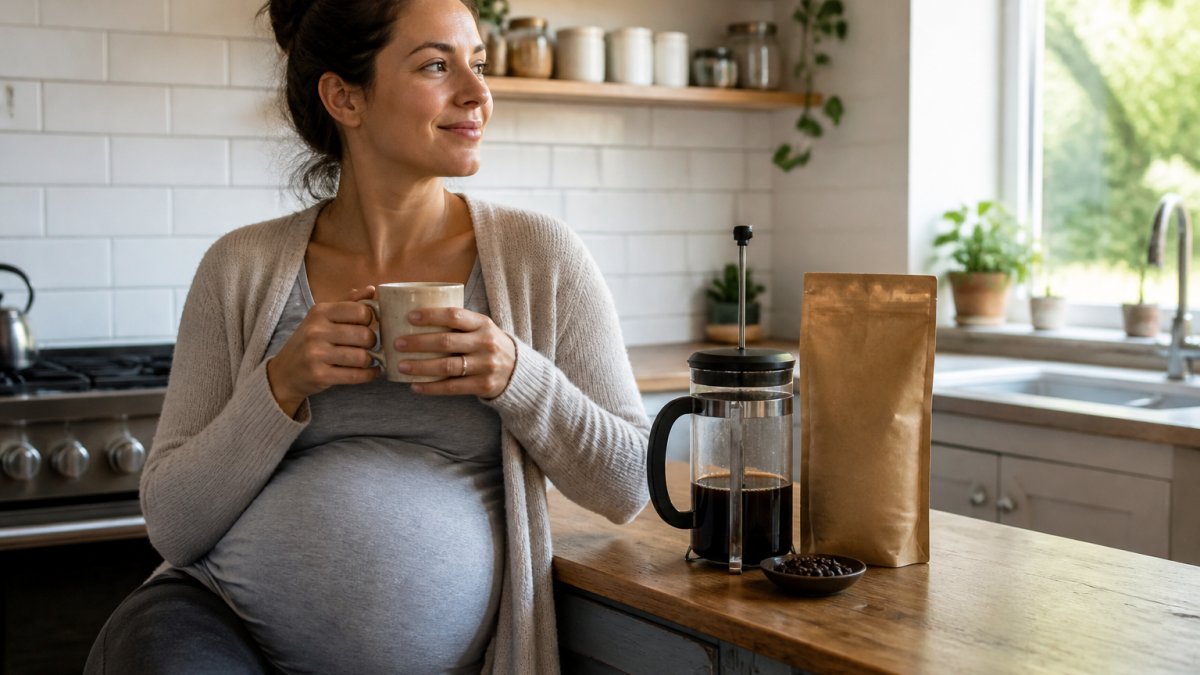
Here is the short answer: the acid level of your coffee does not change how much caffeine reaches your baby. Caffeine does cross the placenta, and that is the part that matters.
So if you switch to a low acid roast and keep drinking the same number of cups, you have not reduced the thing you were worried about. You have only made your stomach feel better.
That is still worth something. Many pregnant people find that acid reflux and heartburn get worse as pregnancy goes on, and a smoother cup helps.
But it is not the same as cutting caffeine.
The Caffeine Limit During Pregnancy: What 200 Milligrams Looks Like
Most U.S. obstetric guidance points to a daily caffeine limit during pregnancy of about 200 milligrams. That is the number you will see repeated by the American College of Obstetricians and Gynecologists and similar bodies, and it is the one worth building your routine around.
What does 200 milligrams actually look like?
| Drink | Typical Caffeine | Notes |
|---|---|---|
| 12-ounce brewed coffee | 90-120 mg | Varies by roast and strength |
| Single espresso shot | 60-75 mg | Small volume, concentrated |
| 12-ounce decaf coffee | 2-15 mg | Not always zero |
| 12-ounce black tea | 40-60 mg | Adds up fast |
| 12-ounce soda | 30-45 mg | Easy to overlook |
| 12-ounce energy drink | 70-150 mg | Often higher than a cup of coffee |
| 1 ounce dark chocolate | 15-25 mg | Milk chocolate is lower |
| 1 cup green tea | 25-40 mg | Lighter than black, still counts |
Two 12-ounce cups of regular coffee can land you right at the ceiling. Add a soda at lunch and you are over.
How to Estimate Caffeine in Different Coffee Servings
Caffeine content is not printed on most coffee bags. You have to estimate, and the estimate depends on three things: serving size, brew method, and roast.
- Serving size: A "cup" on a coffee maker is usually 5 ounces, not 8. A travel mug holds 16 or more. That mismatch alone can double your real intake without you noticing.
- Brew method: Espresso concentrates caffeine into a small shot, so a single ounce can carry 60-75 mg. Drip coffee runs roughly 12-20 mg per ounce. Cold brew often lands higher per ounce than drip because of the longer steep and higher grounds-to-water ratio. A French press sits in the drip range but varies with steep time.
- Roast: Darker roasts weigh less per scoop because roasting drives off moisture and mass, so a scoop of dark roast can carry slightly less caffeine than the same scoop of light roast. The difference is small, but it exists.
A simple habit: measure your mug once with water, note the ounces, and do the math from there. Guessing is how people drift past 200 milligrams without noticing.
Caffeine Totals From All Sources, Not Just Coffee
Coffee is not the only source, and this is where most people lose track. Chocolate, some teas, certain sodas, energy drinks, and even some pain relievers and migraine medications contain caffeine. If you are counting only your coffee, you are probably undercounting.
A practical approach:
- Track every caffeinated drink for three days, including the ones you drink out of habit rather than intention
- Add in chocolate and any medication with caffeine, checking the label for "caffeine" or "caffeine anhydrous"
- Compare the total to the 200 milligram guidance
- Adjust from there, trimming the source you care about least
Many pregnant people find they were closer to the limit than they thought, simply because they forgot the afternoon tea or the square of dark chocolate. The point is not to eliminate every milligram. The point is to know your number so the choice is yours rather than an accident.
How Low-Acid Coffee and Acid Reflux Interact in Pregnancy
Low-acid coffee can ease reflux symptoms, but it does nothing for caffeine exposure. That is the honest version, and it is worth saying plainly because the two get blurred together constantly.
Pregnancy hormones relax the valve between the stomach and esophagus. That is why heartburn shows up even in people who never had it before. A coffee with less acid is gentler on an already irritated stomach.
What most guides miss is that "low acid" is not a regulated term. Roasters use it loosely. Some mean a dark roast, since darker beans measure lower in acidity. Some mean a specific processing method.
So the label tells you something, but not everything. If reflux is your main concern, low acid coffee is a reasonable swap. If caffeine is your main concern, it is not the lever you want.
Decaf Coffee During Pregnancy: Does Removing Caffeine Remove the Risk?
Decaf coffee during pregnancy is the closest thing to a clean answer. It removes most of the caffeine, so the exposure question mostly disappears. It does not remove every milligram, which surprises people.
Most decaf still contains a small amount of caffeine. A 12-ounce cup might carry 2 to 15 milligrams. That is low enough that most people stop worrying about it, but it is not zero.
The decaffeination method matters to some buyers. The Swiss Water Process uses water rather than chemical solvents to strip caffeine from the bean, and it is the method behind our Peru Decaf, a medium roast with caramel and citrus notes.

If you want to keep a real coffee ritual without the caffeine load, decaf is the simplest path. If you want some caffeine but less of it, a half caf blend splits the difference.
French Roast - Low Acid (tummy friendly) →

Coffee Alternatives During Pregnancy for a Gentler Morning Ritual
Coffee alternatives during pregnancy are worth keeping in your rotation, even if you still drink coffee. The point is not to quit. The point is to have options that do not push your total over the line.
A few that work well:
- Herbal teas: Rooibos and peppermint are naturally caffeine-free. Check labels, since some blends mix in real tea leaves.
- Chicory root: Roasted and brewed like coffee, with a similar dark, slightly bitter profile.
- Barley or dandelion blends: Caffeine-free and easy to find in most grocery stores.
- Warm water with lemon: Not coffee, but it satisfies the ritual of a warm drink in the morning.
- Half caf coffee: Half the caffeine, most of the taste.
That last one is the compromise most of our customers land on. Our Half Caf blends regular coffee with water-processed decaf in a smooth medium roast, so you keep the flavor and cut the caffeine roughly in half.
What Pregnancy Guidance Gets Right and Where It Stays Vague
Pregnancy guidance is clear on caffeine and vague on acidity, and that gap causes real confusion. The 200 milligram limit is well established and repeated across major medical sources. The FDA's guidance on caffeine and pregnancy takes a similar position, noting that moderate caffeine consumption is generally considered acceptable.
Where it stays vague:
- No standard definition of "low acid" coffee
- Little guidance on how acidity affects reflux during pregnancy specifically
- No official position on whether low acid coffee changes any pregnancy outcome
That last point is the one people most want answered, and the honest answer is that the evidence is not there. Low acid coffee has not been studied as a pregnancy intervention. It is a comfort product, not a safety one.
Why the Evidence Looks Thinner Than It Is
It helps to separate two very different questions that get blended together online.
The first question is whether caffeine affects pregnancy outcomes. That one has a real body of human research behind it, which is why major medical bodies converge on a moderate limit rather than telling everyone to quit.
The second question is whether acidity, independent of caffeine, affects pregnancy outcomes. That one has essentially no human pregnancy research behind it.
So the honest framing is this: caffeine exposure is the variable with evidence behind it, and acidity is the variable with marketing behind it. That does not make low acid coffee useless. It means you should not treat it as a safety upgrade.
When Your Clinician May Set a Different Limit
The 200 milligram figure is a population-level starting point, not a prescription for you. A common pattern is that clinicians adjust it downward for people with specific circumstances:
- A history of miscarriage or pregnancy loss, where a clinician may prefer a lower ceiling or none at all
- Caffeine sensitivity, where even a single cup causes jitteriness, a racing heart, or disrupted sleep
- Pregnancy complications such as restricted growth, high blood pressure, or preterm labor risk
- Sleep problems or anxiety, where caffeine can compound symptoms that already affect pregnancy
- Medications that interact with caffeine or conditions that change how quickly your body clears it
Caffeine metabolism varies widely between people. Some clear it quickly and feel nothing from a cup. Others feel the effects for hours. That difference is real, and it is one reason a single number cannot fit everyone.
Ask your clinician where you fall. Bring your actual daily total, not a guess, so the conversation starts from real numbers.
Conclusion: Making a Confident Choice About Low Acid Coffee
The question is not whether low acid coffee is safe. It is whether the coffee you drink fits inside your caffeine budget, and whether the acidity helps or hurts your stomach along the way.
For most pregnant people, the answer looks like this: keep the cup, watch the milligrams, and let low acid do its job on the reflux side. If you want to cut caffeine without giving up the ritual, our Fairtrade Peru Decaf uses the Swiss Water Process and keeps a smooth caramel and citrus profile. Our Half Caf gives you the middle ground.
Yogalatte roasts for people who want a calm, balanced cup that fits a mindful morning. If you are building a routine you can trust, start with a roast that respects both your stomach and your limits.
Shop now and find the blend that fits your morning.
Frequently Asked Questions
How much caffeine is safe during pregnancy?
Most medical guidance in the United States points to a daily caffeine limit of 200 milligrams during pregnancy. That equals roughly one 12-ounce cup of regular drip coffee. The limit applies to your daily total from all sources, including tea, soda, chocolate, and espresso drinks. If you drink low acid coffee, check the caffeine content per serving rather than assuming it is lower, because low acidity and low caffeine are two separate qualities.
Does low-acid coffee have less caffeine than regular coffee?
No. Acidity and caffeine are unrelated. A low-acid coffee can contain just as much caffeine as a standard roast, depending on the bean and brew method. Low acidity refers to the pH level and the compounds that trigger stomach irritation, not the stimulant content. If you want to reduce caffeine, look for decaf or half-caf options rather than relying on low-acid labeling alone.
Can decaf coffee cause heartburn during pregnancy?
Yes. Decaf coffee still contains acids and other compounds that can relax the lower esophageal sphincter, which is the muscle that keeps stomach acid down. During pregnancy, hormonal changes already relax that muscle, so heartburn is common regardless of caffeine. Choosing a low-acid decaf, such as a Swiss Water Process option, may reduce irritation, but it does not eliminate the possibility of reflux entirely.
What is the safest type of coffee to drink during pregnancy?
The safest approach is to stay within the 200-milligram daily caffeine limit, choose a brew method you tolerate well, and pick coffee that does not worsen reflux. Low-acid options can help if heartburn is your main concern, while decaf or half-caf can help if caffeine sensitivity is the issue. Talk to your doctor or midwife about your individual circumstances, especially if you have a history of miscarriage or other risk factors.