
Table of Contents
- Mindful Morning Routine vs Standard Morning Routine: The Core Difference
- Benefits of a Mindful Morning Routine
- Mindful Morning Routine Examples You Can Copy
- The 7-Minute Morning Routine: A Time-Budgeted Option
- How to Create a Mindful Morning Routine That Fits Your Life
- Where a Standard Routine Wins, and When Mindfulness Falls Short
- Conclusion
- Frequently Asked Questions
Last Updated: October 18, 2026
Mindful Morning Routine vs Standard Morning Routine: The Core Difference
A mindful morning routine is a sequence of deliberate, present-moment activities you perform with full attention, while a standard morning routine is a functional checklist you move through on autopilot. The difference isn't the activities themselves. It's the attention you bring to them.
At Yogalatte, we think about this distinction daily, because the way you take your first cup shapes the hours that follow. A standard routine gets you out the door. A mindful one gets you out the door and settled in your own skin. One is a schedule. The other is a practice.
Below, we'll compare both honestly, including where mindfulness falls short and when a plain, unglamorous checklist is the smarter choice.
Benefits of a Mindful Morning Routine
The strongest case for a mindful morning routine is nervous system regulation. Slow breathing, gentle movement, and unhurried attention give your body a chance to shift out of sleep inertia before demands arrive. But to compare fairly, you have to separate what a mindful routine adds from what a standard routine already does well.
A standard morning routine, alarm, shower, breakfast, commute, is not the villain here. It is efficient, repeatable, and low-decision. Its benefits are real: it reduces choice fatigue, protects punctuality, and frees cognitive bandwidth for the day's actual work. The question is not whether a standard routine is good. It is what it leaves on the table.
Here is the honest side-by-side on benefits:
| Benefit | Standard routine | Mindful routine |
|---|---|---|
| Speed and reliability | Strong, built for it | Weaker, presence takes time |
| Decision fatigue | Low, autopilot handles it | Low if anchored, higher if unstructured |
| Stress reactivity | Unaddressed | Modest reduction with consistent practice |
| Focus through mid-morning | Variable, depends on sleep and inputs | Steadier for many practitioners |
| Emotional balance under setbacks | Not a design goal | A design goal, with mixed real-world results |
| Sleep protection | Can be strong if bedtime is fixed | Can be strong if caffeine timing is deliberate |
The mechanism matters more than the marketing. Mindful practices work on the front end of the stress response: slower breathing and directed attention give the parasympathetic branch a chance to engage before the first email lands. That is why practitioners often describe fewer reactive decisions before their first meeting and better emotional balance during unexpected setbacks. Research on mindfulness generally supports modest reductions in stress reactivity, though results vary by practice, dose, and consistency. American Psychological Association on mindfulness research
The practical wins show up as:
- Fewer reactive decisions before your first meeting
- Better emotional balance during unexpected setbacks
- A clearer sense of daily priorities
- Less phone-scrolling drift
But be skeptical of the stronger claims. A mindful morning routine does not replace sleep, does not treat clinical anxiety or depression, and does not reliably outperform a boring, well-slept standard routine on raw productivity. If your standard routine already includes a fixed wake time, daylight exposure, and a real breakfast, you are capturing most of the physiological benefit. Mindfulness adds a layer on top, regulation and intention, not a replacement for the basics.
A useful way to think about it: a standard routine optimizes for getting out the door. A mindful routine optimizes for how you arrive. Most people need both, and the benefits only compound when the standard structure carries the mindful anchor rather than competing with it.
Mindful Morning Routine Examples You Can Copy
Most routine lists give you one ideal morning and leave you to adapt it. That is backwards. The useful comparison is time-budgeted: what a mindful routine looks like at 5 minutes, 15 minutes, and 30 minutes, and what a standard routine looks like at the same budgets so you can see the trade-off directly.
The 5-minute version (no extra time). This is the no-extra-time option: you are not adding minutes, you are changing attention inside minutes you already spend. Wake, drink a glass of water, and prepare your coffee or matcha without a screen. Sit with the cup for 90 seconds. Breathe four counts in, six counts out, three times. Notice the warmth and the smell before the first sip. A standard 5-minute version is the same sequence on autopilot, water, brew, sip while checking your phone. Same time, different attention.

The 15-minute version. Five minutes of gentle movement (neck rolls, shoulder openers, a short stretch), then three lines in a notebook: one thing you're carrying, one thing you're grateful for, one intention for the day. Then brew and sit with the cup for the remaining minutes. A standard 15-minute version is shower, dress, grab breakfast, scan headlines. The mindful version trades headline scanning for reflection; the standard version trades reflection for information.
The 30-minute version. Ten minutes of seated meditation, a ten-minute walk outside, then breakfast and a slow drink. This suits people who need quiet before conversation and can protect a longer block. A standard 30-minute version is a longer shower, a fuller breakfast, and a commute buffer. The mindful version spends the extra time on regulation; the standard version spends it on margin.
Notice what all three mindful versions share: no feeds, no inbox, no rush. The mug is doing real work here, and it's why we designed our Yoga Latte Ceramic Mug to be cradled between both palms. A 12 oz ceramic mug you hold with two hands is harder to carry while scrolling.

Matching the routine to your constraints. The right version depends less on aspiration than on schedule. If you have a new baby or caregiving duties, the 5-minute no-extra-time version is the realistic ceiling, and that is fine. If you start an early shift, protect sleep first and use the 5-minute version only on days you wake naturally. If you work from home with a flexible start, the 15-minute version is usually the sweet spot.
The 7-Minute Morning Routine: A Time-Budgeted Option
Seven minutes is enough for a real practice. The 7-minute morning routine works because it removes the excuse that you don't have time.
Yoga Latte Ceramic Mug — Yoga & Coffee Lovers Gift →
Try this sequence:
- Minute 1: Water, no phone.
- Minutes 2-3: Slow breathing, four counts in, six counts out.
- Minutes 4-5: Gentle stretch, neck and shoulders.
- Minute 6: Set one intention for the day.
- Minute 7: Prepare your drink with full attention.
That last minute matters more than it sounds. Brewing with attention, rather than while answering messages, is the smallest possible version of the whole practice. Our Breakfast Blend was roasted for exactly this moment: a light roast with walnut and toffee notes that suits a sunrise pace.

How to Create a Mindful Morning Routine That Fits Your Life
Start with your constraints, not your aspirations. A routine you can repeat on your worst morning beats a beautiful one you abandon by Thursday.
Work through these steps:
- Audit one week. Note your actual wake time and first obligation.
- Pick a single anchor. One activity you'll do every day, no exceptions.
- Attach the rest. Build outward from the anchor only after it holds for two weeks.
- Protect the first ten minutes. No email, no news, no social feeds.
- Choose your drink deliberately. Caffeine timing affects sleep and jitters.
On that last point: if standard coffee leaves you edgy, our Decaf Coffee With Mushrooms blends specialty decaf with Lion's Mane, Cordyceps, and Reishi powders for a smoother option without the caffeine. It's a practical swap, not a miracle.
Where a Standard Routine Wins, and When Mindfulness Falls Short
A standard morning routine is a fixed, functional sequence (alarm, shower, breakfast, commute) optimized for speed and reliability rather than presence. It wins in specific conditions, and pretending otherwise does a disservice to the comparison.
| Situation | Better Choice | Why |
|---|---|---|
| New baby or caregiving duties | Standard | Reliability beats ritual when time is fragmented |
| Early shift start | Standard | Sleep matters more than a practice at 4:45 a.m. |
| High-stress season at work | Mindful | Regulation pays off under pressure |
| Building a new habit | Standard | Simple checklists stick better than elaborate ones |
| Chronic anxiety | Mindful | Deliberate breathing helps settle reactivity |
Mindfulness also has real limits. It doesn't replace sleep, and it isn't a treatment for clinical anxiety or depression. If a racing mind is persistent, that's a conversation with a clinician, not a breathing app. National Institute of Mental Health on anxiety disorders
The honest verdict: most people benefit from a hybrid. Keep the reliable structure of a standard routine and add one mindful anchor inside it.
Conclusion
The real challenge isn't choosing between mindful and standard. It's building a morning you can actually repeat when life gets loud. Start with one anchor, protect the first ten minutes, and let the routine grow from there.
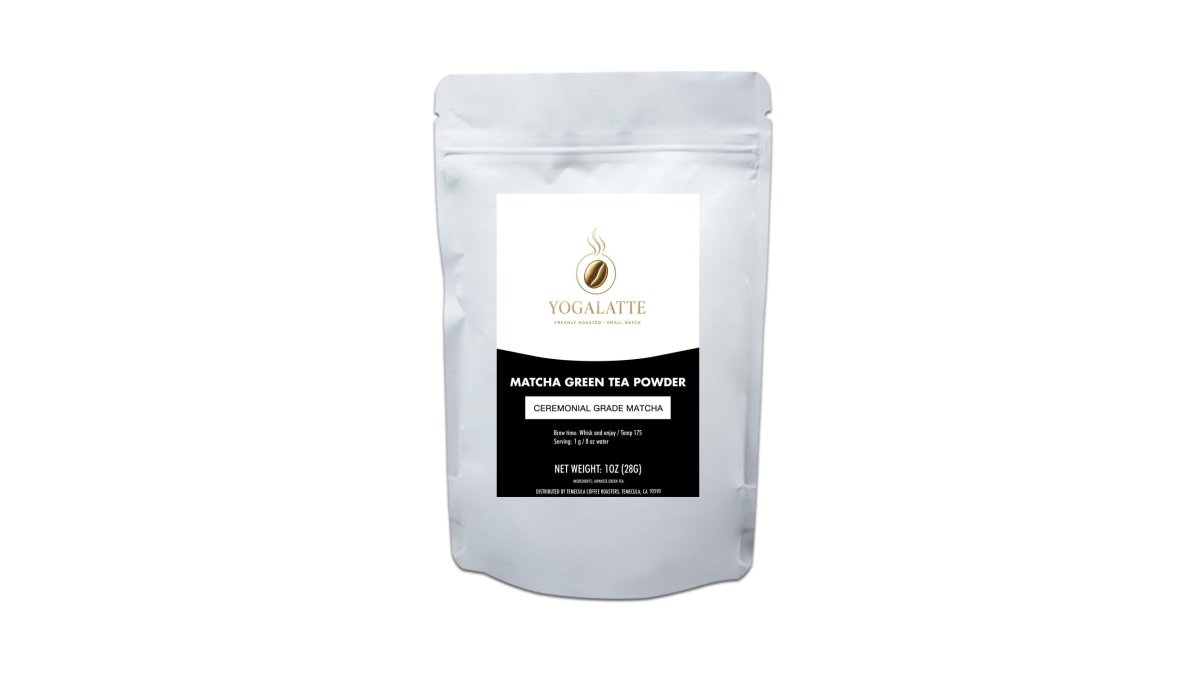
At Yogalatte, we make the drink part of that anchor easier. Our yoga-friendly blends are roasted for a balanced, rich yet smooth cup that centers your senses, and our mugs are built for two-handed, unhurried mornings. Browse the Matcha for a slower, ceremonial pace, or the Yogalatte Black Mug, 15oz if you take your mornings in larger pours.
Shop now and give your morning ritual a cup worth slowing down for.
Frequently Asked Questions
What is the difference between a mindful morning routine and a standard morning routine?
A standard morning routine runs on autopilot: alarm, phone, coffee, commute, with attention scattered across tasks. A mindful morning routine keeps the same practical tasks but adds deliberate attention to a few of them, like breathing before checking your phone or drinking your coffee without scrolling. The difference is not extra time, it is where your focus goes. A 20-minute standard routine and a 20-minute mindful one can contain the same actions; the mindful version just includes pauses that anchor you before the day speeds up.
Can a mindful morning routine improve focus and reduce stress?
The strongest evidence sits with the components, not the label. Regular meditation and slow breathing practices are linked to lower self-reported anxiety and better attention in many studies, and morning light exposure plus a consistent wake time support your sleep schedule. Whether your routine delivers those benefits depends on whether it actually contains those elements and whether you repeat them. A mindful morning routine built around breathwork, journaling, or a quiet cup of coffee gives you repeatable anchors that support focus and emotional balance over time.
How long should a morning routine be?
Long enough to include what matters to you, short enough that you will do it on a rushed Tuesday. Most people get more from a consistent 10 to 20 minutes than an ambitious 60-minute plan they abandon in a week. Start with a 7-minute version: two minutes of breathing, three minutes of gentle movement or stretching, and two minutes of intention setting or journaling. Once that sticks for two or three weeks, add time. A routine you keep beats a longer routine you skip.
How do I make my morning routine more mindful?
Attach attention to something you already do. Before reaching for your phone, take five slow breaths. While the kettle heats, stand still and notice your feet on the floor. Drink your first coffee or tea without a screen, holding the mug with both hands and noticing the warmth and taste. Pick one or two of these anchors rather than overhauling everything. Small steps repeated daily build the habit of reflection far better than a full routine you attempt once and drop.
Is a standard morning routine just as effective as a mindful one?
It can be, depending on your goal. If your aim is simply to get out the door on time with breakfast eaten and your bag packed, a standard routine does that efficiently and there is no reason to complicate it. A mindful routine earns its place when you want mental clarity, emotional balance, or a buffer against stress. The honest answer is that the best routine is the one matched to what you need, and many people land on a hybrid: practical tasks handled quickly, with one deliberate pause built in.