
Table of Contents
- What Makes a Dark Roast Smooth, Not Bitter
- How to Brew Dark Roast Coffee for Maximum Smoothness
- Low Acidity Dark Roast: Why It's Easier on Your Stomach
- Caffeine in Dark Roast: What You Actually Get
- Common Myths About Dark Roast Coffee
- How to Choose High-Quality Smooth Dark Roast Beans
- Sustainability and Sourcing in Dark Roast Coffee
- Conclusion
- Frequently Asked Questions
Last Updated: September 30, 2026
What Makes a Dark Roast Smooth, Not Bitter
A smooth dark roast carries deep, developed flavor without the sharp, ashy edge most people associate with dark beans. The difference comes down to two things: how the beans were roasted, and how you brew them. At Yogalatte, we built our blends around that distinction, because a dark roast can taste like burnt toast or like caramelized cocoa.
Why Some Dark Roasts Taste Burnt
Burnt flavor is a roasting defect, not a roast level. When a roaster extends the roast too long after first crack, the sugars that create caramelized sweetness burn off entirely, leaving carbon and ash.
- Oily, almost greasy surface on the whole bean, not just a light sheen
- Smell of smoke or char rather than roasted cocoa or toasted nuts
- Uniform black color with no variation between beans
- Harsh, lingering finish that coats the back of your throat
The Role of Bean Quality and Roast Profile
Bean density matters more in dark roasting than anywhere else. Dense, high-grown arabica holds up to longer roast times without turning to ash. Softer, lower-grown beans collapse under the same heat.
How to Brew Dark Roast Coffee for Maximum Smoothness
Brewing dark roast coffee well means adjusting for the bean, not following a universal recipe. Dark beans are more porous and carry more soluble compounds from the longer roast, so they extract faster, which is why so many cups turn bitter.
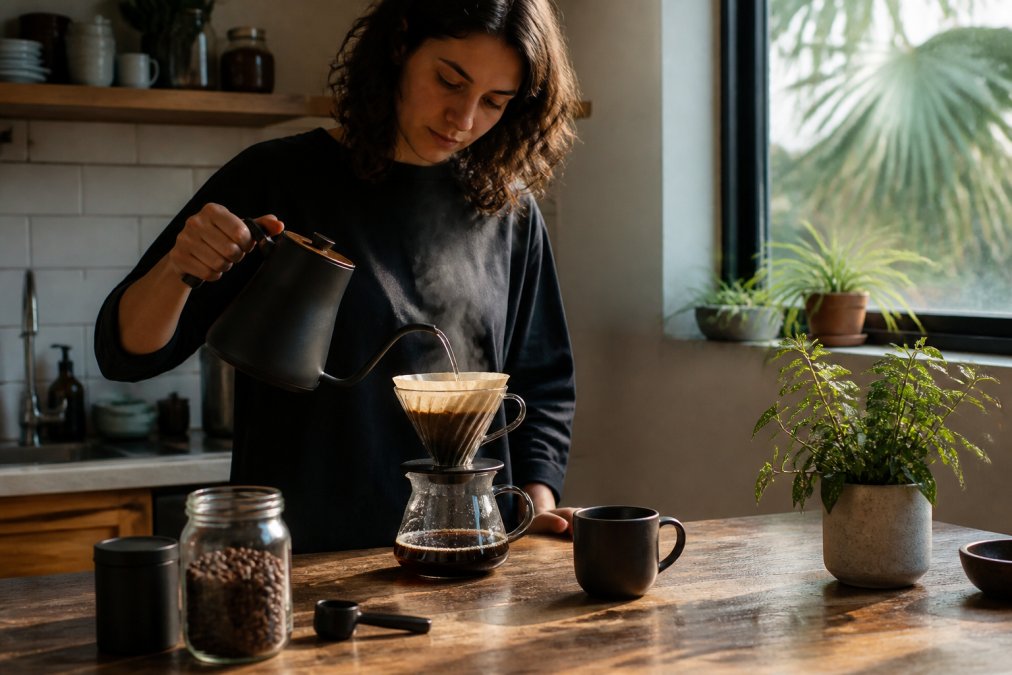
Grind Size and Water Temperature
Drop your brewing temperature to between 185°F and 195°F. Brewing at 200°F or above works for lighter roasts but pulls harsh compounds out of dark beans almost immediately.
Grind size should lean coarse:
| Brew Method | Grind Size | Water Temp | Brew Time |
|---|---|---|---|
| French press | Coarse | 190°F | 4 minutes |
| Pour-over | Medium-coarse | 192°F | 2:30 to 3:00 |
| Drip machine | Medium | 190°F | Standard cycle |
| Espresso | Fine | 195°F | 25 to 30 seconds |
Best Brewing Methods for Smooth Results
The French press is the most forgiving method for dark roast. Its full immersion and metal filter preserve the oils that carry body and mouthfeel, and the coarser grind slows extraction.
Low Acidity Dark Roast: Why It's Easier on Your Stomach
Low acidity dark roast coffee is gentler on digestion, but the reason is more specific than most guides let on. Roasting doesn't "remove acid", it changes which acids are present and how your stomach responds to them.
Not All Acidity Is the Same
"Acidity" in coffee gets used two ways, and conflating them causes confusion.
- Perceived acidity (brightness): the lively, fruity, sometimes tart sensation on your palate. This is a flavor attribute, and dark roasts have less of it.
- Chemical acidity (pH and titratable acids): the measurable acid content that can trigger reflux or gastric irritation. This is what sensitive drinkers actually care about.
The Brewing Levers That Matter More Than Roast Level
For anyone with reflux, gastritis, or general sensitivity, how you brew a dark roast can matter as much as the roast itself.
- Paper filters remove oils and fine particles. Metal filters and French presses let cafestol and kahweol, the diterpene oils in coffee, pass into the cup. These oils are associated with digestive irritation in some drinkers. A paper filter traps most of them. If a French press dark roast still bothers your stomach, switching to a pour-over with a paper filter is often the single most effective change.
- Cold brew extracts fewer irritants. Cold water extracts far less of the acid and oil fraction than hot water does. A dark roast cold brew is frequently the most stomach-friendly version of the same bean.
- Shorter contact time reduces total acid extraction. A 4-minute French press steep pulls more acid than a 2:30 pour-over of the same grind. If sensitivity is the priority, lean toward faster methods.
- Lower brew temperature helps. Brewing at 185°F to 195°F instead of 200°F+ extracts less of the harsh acid fraction, which is the same adjustment that smooths out bitterness.
What Dark Roast Won't Fix
A dark roast is not a cure for caffeine sensitivity, and it won't help if your discomfort comes from an empty stomach, added dairy, or scorched beans, since a burnt roast introduces its own harsh compounds. The roast level is one variable among several.
Caffeine in Dark Roast: What You Actually Get
Caffeine content in dark roast is slightly lower by weight than in light roast, but the difference is smaller than most people assume and rarely a reason to choose one over the other.
The Roast-Level Effect Is Real but Small
Caffeine is heat-stable and survives roasting far better than the acids and sugars that define flavor. What changes is the bean's mass: a dark roast can shed roughly 15 to 20 percent of its original weight. Because caffeine stays put while everything around it burns off, caffeine concentration by weight actually rises slightly as the roast darkens.
What Actually Moves Caffeine in Your Cup
If caffeine is what you care about, these levers matter far more than roast level:
- Dose. More grams of coffee means more caffeine, full stop. Going from 15 grams to 20 grams in a pour-over is a bigger swing than any roast-level difference.
- Grind size. A finer grind exposes more surface area and extracts caffeine faster. Espresso, with its fine grind, pulls a high concentration of caffeine per ounce even though the total shot volume is small.
- Brew ratio. A 1:15 coffee-to-water ratio delivers more caffeine than a 1:18 ratio of the same beans.
- Contact time and temperature. Longer, hotter extractions pull more caffeine. Cold brew, despite its long steep, extracts caffeine more slowly because of the low temperature, which is why a cold brew concentrate can be strong but a diluted serving is often moderate.
- Brewing method. A 12-ounce drip coffee typically lands in the 95 to 165 mg range depending on dose and bean, while a single espresso shot is usually around 60 to 75 mg. The method shapes the number more than the roast.
A Quick Reference by Method
| Method | Typical Serving | Approximate Caffeine |
|---|---|---|
| Drip | 12 oz | 95 to 165 mg |
| Pour-over | 12 oz | 95 to 150 mg |
| French press | 12 oz | 100 to 160 mg |
| Espresso | 1 shot (1 oz) | 60 to 75 mg |
| Cold brew | 12 oz (diluted) | 100 to 200 mg |
These ranges shift with dose, grind, and bean, which is exactly the point. Roast level is a minor variable inside a much wider band.
Why Dark Roast Feels Different
The bottom line: dark roast and light roast deliver comparable caffeine cup-for-cup. Choose dark roast for taste and stomach comfort, and manage caffeine through dose, grind, and method.
Common Myths About Dark Roast Coffee
The biggest myth is that dark roast is "burnt by design." A well-roasted dark bean is developed, not destroyed, and should read as chocolatey notes, toasted nuts, and caramelized sweetness rather than smoke.
Other myths worth retiring:
- "Dark roast has way more caffeine." False. It has slightly less by weight.
- "Dark roast is lower quality." False. It's often harder to roast well because there's less margin for error.
- "You can't taste origin in dark roast." Partly true. The roast profile does mask some single-origin character, but a skilled roaster can still preserve regional notes.
- "Oil on the surface means the beans are stale." False. Surface oil is a natural result of the Maillard reaction and longer roasting.
How to Choose High-Quality Smooth Dark Roast Beans
Start with the roast date. Freshness is the single strongest predictor of how a dark roast will taste in your cup.
Look for:
- A roast date within the last two weeks, printed clearly on the bag
- Whole beans over pre-ground, since grinding accelerates staleness
- A one-way degassing valve on the packaging, which lets carbon dioxide escape without letting oxygen in
- Single-origin or clearly stated blends, not vague "gourmet" labeling
- A roaster who describes the roast profile, not just the origin
Sustainability and Sourcing in Dark Roast Coffee
Sourcing transparency has become a real differentiator in specialty coffee, and dark roast is no exception. The longer roast can hide defects in low-grade beans, so some budget dark roasts are built on cheap, poorly sourced green coffee.
Conclusion
The gap between a smooth dark roast and a bitter one comes down to three things: how the beans were roasted, how fresh they are, and how you brew them. Get those right and dark roast delivers bold flavor, creamy texture, low acidity, and a lingering finish that feels like dessert rather than punishment.
Frequently Asked Questions
What makes a dark roast coffee taste smooth rather than bitter?
Smoothness comes from proper development during roasting and careful brewing. A well-developed dark roast has caramelized sugars and oils that coat the palate, creating a full-bodied mouthfeel with low bitterness. Bitterness often results from over-extraction or beans that were roasted too fast. Using the right grind size and water temperature helps you extract chocolatey, toasted nut notes instead of harsh, burnt flavors.
Does a dark roast have more caffeine than a light roast?
No, dark roasts actually have slightly less caffeine by volume. However, because dark roast beans are less dense, you might use more beans per scoop, which can even out the difference. If you're sensitive to caffeine, focus on your total intake and brewing method rather than roast level alone.
Are dark roasts better for sensitive stomachs?
Dark roasts tend to be lower in acidity than light or medium roasts, which can make them gentler on sensitive stomachs. During longer roasting, some of the acids break down. If you experience discomfort with coffee, a low acidity dark roast brewed with a paper filter (which traps some oils) may be a better choice. Always listen to your body and consult a healthcare provider if symptoms persist.
What brewing methods produce the smoothest dark roast flavor?
French press and espresso are classic choices for dark roasts because they highlight bold, rich flavors. For a smoother cup, try a pour-over with a medium-coarse grind and water just below boiling. Cold brew also works well, as it extracts less bitterness. Experiment with grind size and steeping time to find what suits your taste.
Choosing a dark roast that treats your stomach and your palate well shouldn't require a chemistry degree. Yogalatte offers yoga-friendly coffee blends with balanced, rich yet smooth flavor, crafted with precision and respect for coffee's heritage. Start your morning with a cup that centers your senses and supports a tranquil rhythm. Explore the Yogalatte collection and find the blend that fits your ritual.