
Table of Contents
- Premium Coffee vs Grocery Store Coffee: The Real Price Gap
- Why Specialty Coffee Costs More: From Farm to Roastery
- Growing Conditions, Harvest Yields, and Climate Risk
- Processing, Sorting, and Quality Control Costs
- Roasting, Freshness, and the Shelf-Life Factor
- Shipping, Freight, and Retail Markup
- A Transparent Per-Pound and Per-Cup Cost Breakdown
- Is Expensive Coffee Worth It? Who Benefits and Who Doesn't
- Frequently Asked Questions
Last Updated: October 17, 2026
Premium Coffee vs Grocery Store Coffee: The Real Price Gap
The price gap between premium coffee and grocery store coffee comes down to how much of the cost sits in the bean itself versus the can. At Yogalatte, we see this question constantly: why does a bag of specialty coffee cost several times what a supermarket tin does? The short answer is that grocery coffee is built to hit a low shelf price, while premium coffee is built around traceable beans, careful processing, and a roast date you can read.
What the Price Tags Actually Tell You
A grocery coffee label tells you the brand and the roast level. That is roughly it. A specialty label usually names the farm or cooperative, the region, the altitude, the variety, and the process.
Why Specialty Coffee Costs More: From Farm to Roastery
Specialty coffee costs more because the raw material is selected, not blended down to a price. Roasters pay a premium for beans that score well on quality and can be traced back to a specific lot. That selection process removes the cheap filler beans that make grocery blends inexpensive.
Green Coffee Quality, Sourcing, and Traceability
Green coffee is the raw, unroasted bean, and it is where most of the cost difference begins. Specialty roasters buy specific lots from specific producers, which means paying for quality and for the paperwork that proves origin. Our Peru single origin, for example, is grown by the Cooperativa Agricola de Servicisios Norandino in Piura, Amazonas, at 1,100 to 1,700 meters.

Farm Labor, Producer Compensation, and Ethical Sourcing
Hand-picking ripe cherries takes labor that machine stripping avoids. Producers who are paid for quality pick selectively and process carefully, and those costs travel up the chain. Many specialty roasters publish sourcing relationships for exactly this reason. The USDA Agricultural Marketing Service coffee reports track how commodity coffee is traded, which helps explain why the commodity floor and the specialty premium are two different markets.
Growing Conditions, Harvest Yields, and Climate Risk
High-altitude farms produce denser beans and more complex flavor, but they also produce smaller harvests. A single bad season, frost, or drought can wipe out a farm's output, and that risk is priced into what roasters pay. Our Ethiopia lot from the Sidama zone grows at 1,700 to 1,900 meters, where yields are naturally lower than flatland commodity farms.
Processing, Sorting, and Quality Control Costs
Processing turns a cherry into a stable green bean, and every method has a cost. Washed coffees require tanks, clean water, and drying infrastructure. Natural coffees require raised beds and constant turning. After processing comes sorting: defect-free beans have to be separated from the rest, often by hand.
- Hand sorting removes defective beans before roasting
- Screen grading separates beans by size for even roasting
- Cupping sessions verify flavor before a lot is bought
Roasting, Freshness, and the Shelf-Life Factor
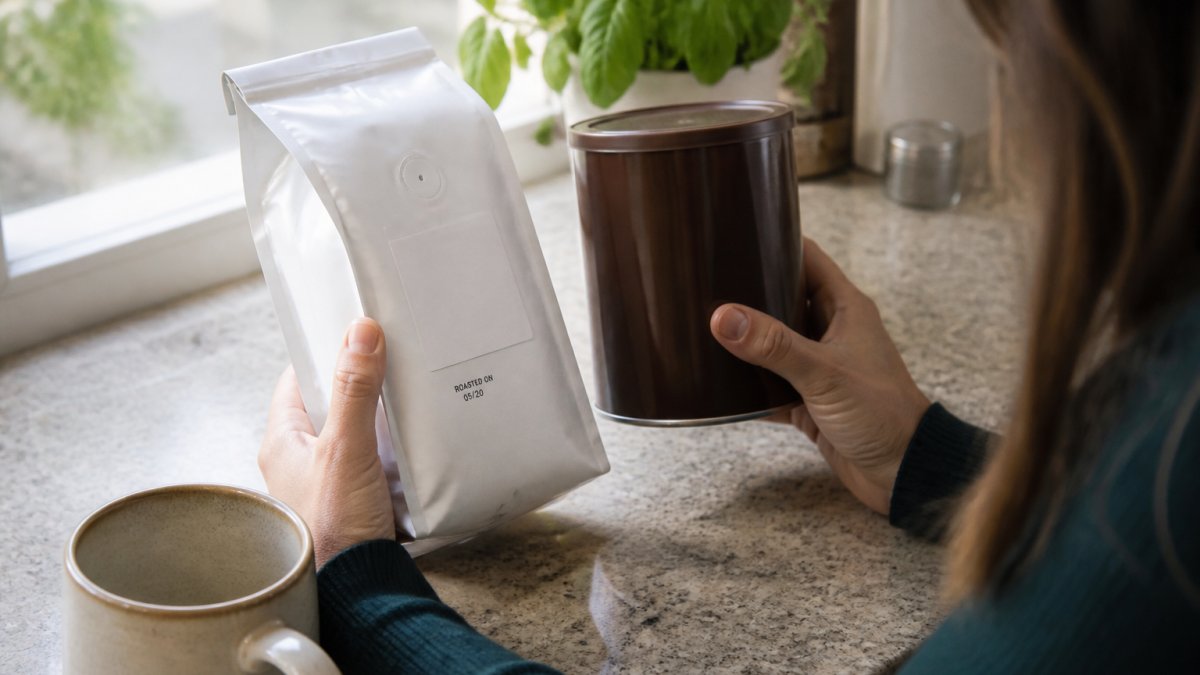
Roast date matters more than most labels admit. Coffee is at its best in the weeks after roasting, and flavor fades as beans sit. Grocery coffee is often roasted months before it reaches the shelf and given a "best by" date instead of a roast date.
Whole bean coffee holds its flavor longer than ground coffee because the surface area is smaller. Grinding exposes the oils to air, which is why pre-ground grocery coffee tastes flat faster.
Shipping, Freight, and Retail Markup
Coffee is an imported agricultural product, and by the time a roasted bean reaches a shelf it has crossed an ocean, cleared customs, been warehoused, roasted, packaged, and distributed. Each of those steps adds cost, and the way those costs are spread differs sharply between a grocery chain and a specialty roaster.
From origin to port
Green coffee moves from producing regions to ports by truck and rail, then crosses the ocean in shipping containers. Ocean freight rates are volatile and have swung widely in recent years, which is why roasters who buy on long contracts and roasters who buy spot lots can end up with very different landed costs for similar beans. Once the container arrives, import duties, customs brokerage, and port fees apply before the coffee ever reaches a warehouse.
From port to roastery
A grocery chain typically receives coffee at regional distribution centers and moves it to stores on its own trucks, spreading freight across enormous volume. A specialty roaster often receives smaller lots, pays for warehousing, and roasts in small batches, all of which cost more per pound because the fixed costs are spread across fewer bags. That is not inefficiency; it is the price of freshness and traceability.
Retail markup and the volume effect
Retail margin is where the two models diverge most visibly. A grocery chain buys in enormous volume, negotiates slotting fees and promotional allowances, and can absorb freight swings across thousands of stores and dozens of categories. A specialty roaster sells through a smaller number of channels, often direct-to-consumer, and carries the cost of smaller production runs. The result is that a larger share of the specialty bag's price reflects the true cost of the coffee, while a larger share of the grocery can's price reflects the retailer's ability to compress costs through scale.
| Cost Layer | Grocery Store Coffee | Premium Coffee |
|---|---|---|
| Green bean quality | Blended commodity lots | Traceable single lots |
| Labor | Machine harvest, minimal sorting | Hand picking, hand sorting |
| Processing | Bulk, standardized | Method-specific, small batch |
| Freshness | Best-by date, long shelf life | Printed roast date |
| Volume | Massive retail scale | Smaller, curated runs |
| Freight and duties | Spread across high volume | Carried per smaller lot |
| Retail margin | Compressed by scale and promotions | Reflects true cost per bag |
The practical takeaway is that shipping and retail markup are real costs in both models, but they land differently. Grocery coffee hides them in scale; premium coffee shows them in the bag. Neither is dishonest, they are simply different products built for different priorities.
Best Sellers Sample Pack: 6Bean, Cowboy, Breakfast, Peru, Mexico, Bali →
A Transparent Per-Pound and Per-Cup Cost Breakdown
Most price comparisons stop at the shelf tag, which is why they mislead. A 12-ounce bag and a 24-ounce can are not the same unit, and a light, dense specialty roast often yields more brewed coffee per ounce than a dark, brittle grocery roast. The honest comparison is cost per brewed cup at a consistent dose.
Cost per pound, layer by layer
A useful way to see where the money goes is to express each layer as a cost per pound of roasted coffee. The exact figures vary by lot, origin, and roaster, but the structure is consistent across the specialty supply chain:
- Green coffee: The raw bean is typically the largest single input for a specialty roaster, and it is priced per pound of green coffee before roasting. Roasting removes moisture, so a pound of roasted beans starts as more than a pound of green coffee, a yield loss that has to be priced in.
- Labor and sorting: Hand picking, screen grading, and defect sorting add cost per pound at the farm and at the dry mill.
- Processing: Washed, natural, and honey methods each carry different infrastructure and water costs, and those costs are embedded in the green price.
Grocery coffee compresses most of these layers by buying commodity blends in enormous volume, machine harvesting, and roasting for shelf stability rather than peak freshness. That is a legitimate business model, it just produces a different product.
Cost per brewed cup, like for like
To compare fairly, hold the dose and the brew method constant. A common starting dose is 1:16 coffee to water by weight, which means a 12-ounce bag (about 340 grams) yields roughly 21 brewed 10-ounce cups at an 18-gram dose.
Run the math on a few realistic price points:
- A 12-ounce premium bag at $18.00 works out to about $0.86 per 18-gram cup.
- A 12-ounce premium bag at $24.99 works out to about $1.19 per cup.
- A 24-ounce grocery can at $9.99 works out to about $0.27 per cup at the same dose, but grocery coffee is often dosed weaker, so the real-world gap is narrower than the shelf tags suggest.
The per-cup gap between a $9.99 can and an $18.00 specialty bag is roughly 59 cents. Over a daily cup, that is about $18 a month, a meaningful but not extravagant difference for drinkers who notice flavor and freshness.
The freshness multiplier
Cost per cup assumes the coffee is used at its best. A grocery can with a "best by" date may sit for months, and pre-ground coffee stales faster than whole bean because more surface area is exposed to oxygen. If half a bag goes stale before you finish it, your effective cost per good cup rises. Buying smaller bags, storing whole bean in an airtight container away from light and heat, and grinding right before brewing protects the per-cup value you paid for.
Our Best Sellers Sample Pack at $24.99 lets you try six coffees in 2-ounce packs before committing to a full bag, which is the lowest-risk way to test whether the per-cup premium is worth it for your routine. The Single Origin Favorites Sample Pack at the same price covers Brazil Santos, Colombia, Costa Rica, Ethiopia, Honduras, and Tanzania. If you want to save money on premium coffee, buy whole bean, grind at home, and store it properly, the per-cup math rewards it.

Is Expensive Coffee Worth It? Who Benefits and Who Doesn't
Expensive coffee is worth it if you drink it black or with minimal milk, because flavor differences show up most clearly without additions. It is also worth it if you care about traceability and producer compensation, since those claims are verifiable on a good label. It is not worth it if you load your cup with syrup and drink it cold, where subtle notes disappear.
At Yogalatte, our roasts are built for a calm, centered morning ritual: balanced, rich yet smooth, with delicate roast notes that brighten your day. Start with a sample pack, find the blend that fits your routine, and let every cup center your senses. Shop now and taste the difference for yourself.
Frequently Asked Questions
Why is coffee so expensive all of a sudden?
Coffee prices have risen because of several overlapping pressures: climate disruption in major growing regions has cut crop yields, freight and shipping costs increased, and tariffs on imports added expense. Grocery-store coffee is also affected, but premium coffee absorbs these costs differently because it starts with higher-priced green coffee and smaller production runs. The result is that both categories cost more than a few years ago, but the gap between them comes down to sourcing, labor, and freshness rather than the recent spikes alone.
Is expensive coffee worth it?
It depends on how you brew and how much you notice flavor. A $24.99 bag of single-origin coffee like Yogalatte's Peru, with its salted caramel and citrus notes, costs more per pound than a grocery-store can, but the per-cup difference is often smaller than the bag price suggests. If you drink one cup a day and value aroma, consistency, and a roast date you can trust, the premium is easy to justify. If you load your coffee with milk and sugar or drink it mostly for caffeine, a cheaper option may serve you just as well.
Does more expensive coffee taste better?
Not automatically, but price often correlates with factors that affect flavor: defect-free beans, careful sorting, a recent roast date, and traceable origins. Grocery-store coffee can sit on shelves for months, and staleness mutes aroma and brightness. A premium coffee like Yogalatte's Bali Blue, with dark chocolate and molasses notes, tastes better when brewed within weeks of roasting. The key is freshness and quality control, not the price tag alone. A cheap coffee roasted last week can beat an expensive bag roasted last year.
How can I save money on premium coffee without giving up quality?
Buy whole bean and grind just before brewing, store beans in an airtight container away from light and heat, and try sample packs to find a favorite before committing to full bags. Yogalatte's Best Sellers Sample Pack and Single Origin Favorites Sample Pack each cost $24.99 and let you test six coffees in 2-ounce portions, so you don't waste money on a full bag you don't enjoy. Brewing at home instead of buying café cups is the single biggest saver, often cutting cost per cup by more than half.