
Last Updated: November 2, 2026
Quick Summary
Dark roast coffee generally contains slightly less caffeine than light roast when measured by weight, and the difference is small. The dark roast caffeine gap exists because beans lose moisture and mass during roasting, though per scoop the two roasts land close together. Dose and brew method matter far more than roast level.
- A 2024 controlled study of filter coffee found dark roasts had generally lower caffeine concentrations than light and medium roasts.
- Per scoop, dark and light roast can land within a few milligrams of each other in a standard drip brew.
- Roasting does not create or destroy meaningful caffeine, so a single light bean and dark bean land close together.
- Pick your roast for flavor, then manage caffeine through dose and serving size.
- Yogalatte blends are $24.99 each, including the high caffeine Max Caf Blend of Tanzania and India Robusta.
Table of Contents
- The Short Answer: Dark Roast vs Light Roast Caffeine
- Light Roast vs Dark Roast Caffeine by Weight
- Light Roast vs Dark Roast Caffeine per Scoop
- Does Dark Roast Have Less Caffeine? What the 2024 Study Shows
- Why the Caffeine Numbers Keep Contradicting Each Other
- Light Roast vs Dark Roast Taste: What Changes in the Cup
- Brewing Method and Serving Size: The Variables That Matter More
- Choosing Your Roast at Yogalatte
- Frequently Asked Questions
The Short Answer: Dark Roast vs Light Roast Caffeine
Dark roast coffee generally contains slightly less caffeine than light roast when measured by weight, and the difference is small. The confusion around dark roast vs light roast caffeine content explained comes down to one thing: roasting changes bean weight, not the caffeine the bean started with.
Here is the mechanism in plain terms. Caffeine is a heat-stable molecule. It survives the roaster largely intact. What the roasting process does change is mass: beans lose moisture and expand, so a dark roasted bean weighs less than a light roasted bean from the same harvest. Scoop coffee by volume and you pack more dark beans into the same space, which is why a scoop of dark roast can land close to a scoop of light roast on total caffeine.
If you want more caffeine per cup, our Max Caf Blend is a high caffeine blend of Tanzania and India Robusta.

Light Roast vs Dark Roast Caffeine by Weight
By weight, light roast coffee usually carries more caffeine than dark roast. That is the finding from a 2024 controlled study of filter coffee published through PubMed Central's caffeine and roast study, where researchers Z. R. Lindsey and colleagues brewed light, medium, and dark roasts under identical conditions. Caffeine concentrations in the brewed samples were generally lower for dark roasts than for light and medium roasts (Caffeine content in filter coffee brews as a function of degree of roast and extraction...).
The reason is moisture loss. A dark roast spends longer in the roaster, loses more water, and ends up lighter per bean.
The size of the gap is the part worth internalizing. Roast-level differences in caffeine are generally small compared with the variation that comes from dose and brew method. So the per-gram advantage for light roast is real and directionally consistent, but it is a minor lever compared with your dose and your brew method.
Our Blonde is a sweet blend from Central America and Africa, great for sweet espresso.

Light Roast vs Dark Roast Caffeine per Scoop
Per scoop, the light roast vs dark roast caffeine per scoop comparison gets murkier, and this is where most internet arguments start. A scoop measures volume, not mass. Dark beans are larger and less dense after roasting, so a scoop of dark roast holds fewer beans by weight than a scoop of light roast. That partially offsets the per-gram advantage light roast holds.
What does that mean in practice? The two roasts can land within a few milligrams of each other in a standard drip brew, even though the per-gram numbers look clearly separated. If you measure with a scoop and never weigh, you may never taste or feel a meaningful difference. If you weigh your dose, the light roast advantage shows up.
Does Dark Roast Have Less Caffeine? What the 2024 Study Shows
Yes, on a controlled like-for-like basis, dark roast can have less caffeine in the brewed cup, though the difference is small.
But the same body of reporting adds a caveat worth taking seriously. Daily Coffee News coverage of the roast and caffeine study reported that lighter roasts generally had more caffeine, but the outcome depended on extraction yield. In other words, how much of the available caffeine actually makes it into your cup matters as much as what the bean started with.
That single qualification explains why the "does dark roast have less caffeine" question refuses to die. The answer is yes, usually, by a small margin, under conditions most home brewers never replicate.
Why the Caffeine Numbers Keep Contradicting Each Other
Contradictory caffeine claims usually come from mismatched measurement methods, not bad science. One source measures caffeine per bean, another per gram, another per scoop, another per brewed ounce. Each produces a different answer, and each is technically correct within its own frame. The fix is to compare like with like, and to know which frame a given number is using before you trust it.
Here is what each measurement basis actually does to the light-versus-dark comparison:
- Per bean: Roasting does not create or destroy meaningful caffeine, so a single light bean and a single dark bean from the same harvest land close together. This frame makes roast level look irrelevant, and for caffeine per bean it largely is.
- Per gram: Dark beans lose more moisture and mass in the roaster, so a gram of dark roast contains slightly less coffee solids and slightly less caffeine. This frame favors light roast, by a small margin.
- Per scoop: A scoop measures volume. Dark beans are larger and less dense, so a scoop of dark roast holds fewer beans by weight, which partly offsets the per-gram gap. This frame tends to bring the two roasts close together.
- Per brewed serving: What reaches the cup depends on dose, grind, brew time, water temperature, and coffee-to-water ratio. This frame is dominated by your brewing choices, not by roast level.
That is the whole contradiction in one place. A per-bean claim, a per-gram claim, and a per-scoop claim can all be accurate and still appear to disagree, because they are answering different questions. When you see two sources conflict, check which basis each is using before assuming one is wrong.
Three variables drive most of the remaining disagreement:
- Measurement basis: per bean, per gram, per scoop, or per brewed serving all tell different stories.
- Extraction yield: grind size, brew time, water temperature, and coffee-to-water ratio change how much caffeine reaches the cup.
- Bean variety: Arabica and Robusta differ in baseline caffeine, and blends mix them in unknown proportions.
Here is the comparison in one place:
| Measurement Method | Light Roast | Dark Roast | What It Tells You |
|---|---|---|---|
| Per bean | Similar caffeine | Similar caffeine | Roasting does not create or destroy much caffeine |
| Per gram | Higher | Lower | Dark beans lose mass during roasting |
| Per scoop | Close | Close | Volume offsets the per-gram gap |
| Per brewed serving | Depends on dose | Depends on dose | Your coffee dose matters more than roast level |
Watch out: treating any single number as the definitive answer is the most common mistake here. The measurement method decides the result before the coffee is even brewed.
Light Roast vs Dark Roast Taste: What Changes in the Cup
Roast level changes flavor far more dramatically than it changes caffeine. That is the part the caffeine debate tends to bury. A light roast keeps more of the bean's origin character: brighter acidity, fruitier notes, a lighter body. A dark roast pushes toward bittersweet chocolate, caramelized sugar, and a heavier mouthfeel, with the roast itself taking over the flavor.
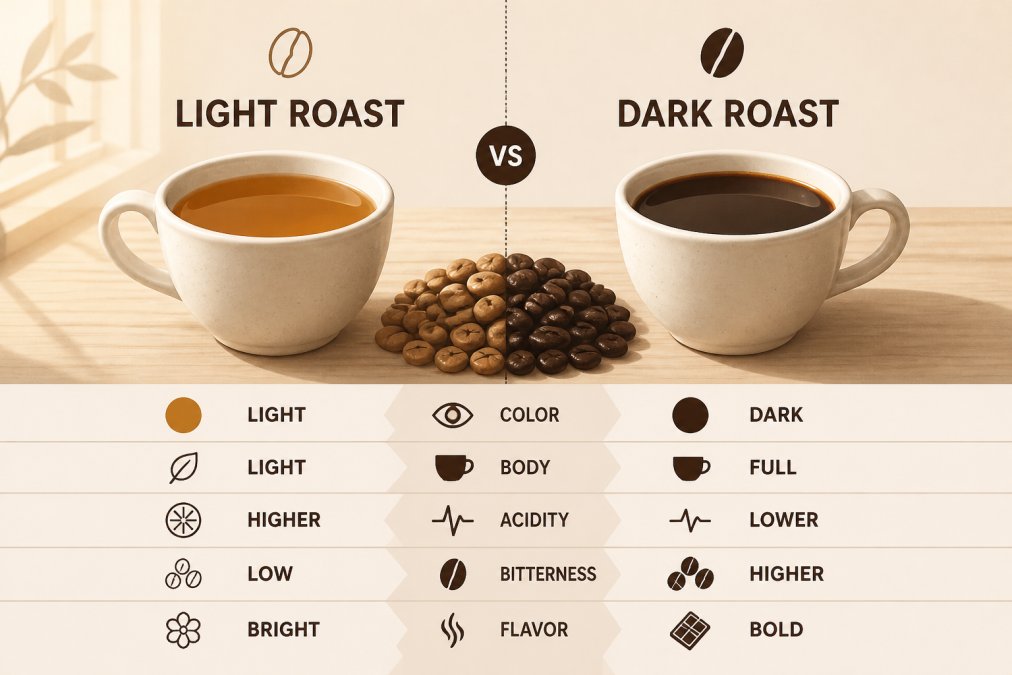
Bitterness is the other variable. Longer roasting develops more of the bitter compounds, which is why a poorly brewed dark roast turns harsh fast. A well-roasted dark blend stays smooth. For a deeper look at that balance, our guide to smooth dark roast coffee walks through what to look for.
Brewing Method and Serving Size: The Variables That Matter More
Brewing method moves caffeine numbers more than roast level does. A dark roast brewed strong in a small cup can deliver more caffeine than a light roast brewed weak in a large one. Dose, grind size, brew time, water temperature, and coffee-to-water ratio all sit downstream of the roast decision and all change the outcome.
Serving size is the simplest lever of all. Two cups of anything beats one cup of the "higher caffeine" roast every time. If you are trying to dial your intake down rather than up, our guide on how to cut caffeine from your morning coffee routine covers the practical adjustments.
The honest summary: pick your roast for flavor, then manage caffeine through dose and serving size. Roast level is a minor variable wearing a major reputation.
Choosing Your Roast at Yogalatte
At Yogalatte, the choice comes down to flavor and how much lift you want. For a dark, smoky option, browse our French Roast. Our blends are $24.99 each.
- Italian Roast: our darkest roast, a slow-roasted blend of specialty grade Arabica and Robusta.
- 6 Bean Blend: a dark roast house blend drawn from coffees around the world, great for espresso.
- Breakfast Blend +: a medium roast with added Robusta for extra caffeine.
- Max Caf Blend: our high caffeine blend of Tanzania and India Robusta.
- Blonde: a sweet Central American and African blend, great for sweet espresso.
Frequently Asked Questions
Does dark roast coffee have less caffeine than light roast?
By weight, usually yes, but only slightly. A 2024 study of filter coffee brewed under identical conditions found caffeine concentrations were generally lower for dark roasts than for light and medium roasts. The gap is small, and it depends on extraction yield. By volume, the answer can flip: dark beans lose moisture and become less dense, so a scoop holds less coffee mass and therefore less caffeine.
Does light roast vs dark roast caffeine per scoop favor the light roast?
Often it does, because of density. Dark roasting drives off moisture and expands the beans, so a fixed scoop of dark roast weighs less than the same scoop of light roast. Less mass means less caffeine in that scoop.
What is the difference in light roast vs dark roast taste?
Light roasts keep more of the bean's origin character: fruit, floral notes, and brighter acidity. Dark roasts develop deeper flavors from the roasting process itself, with cocoa, caramel, and bitterness moving forward while acidity drops. Medium roasts sit between the two.
Does brewing method affect caffeine more than roast level?
Yes. Your coffee dose, grind size, coffee-to-water ratio, brew time, and water temperature move caffeine in the cup far more than roast level does. A dark roast brewed with a generous dose can easily contain more caffeine than a lightly dosed light roast. Fix your dose and ratio first, then adjust roast level for flavor rather than for a caffeine target.
The caffeine difference between light and dark roast is real but small, and it is easily outweighed by how you brew and how much you drink. What actually changes your morning is the flavor you look forward to. Yogalatte roasts balanced, smooth blends designed to center your senses and brighten your day, with a lineup that runs from a bright Blonde to our darkest Italian Roast. Get started with Yogalatte and find the roast that fits your ritual.
