
Table of Contents
- Dark Roast vs Medium Roast for Acid Reflux: Quick Comparison
- How Roast Level Affects Coffee Acidity and Stomach Response
- Low Acid Coffee for Acid Reflux: What the Evidence Shows
- How to Make Coffee Less Acidic for Sensitive Stomachs
- Coffee Brewing Methods for Acid Reflux Relief
- Coffee and GERD Symptoms: Caffeine, Compounds, and Individual Tolerance
- Which Roast to Choose: A Practical Decision Framework
- Frequently Asked Questions
Last Updated: October 14, 2026
Dark Roast vs Medium Roast for Acid Reflux: Quick Comparison
When you're managing acid reflux or GERD symptoms, coffee choice matters more than most people realize. The question of dark roast vs medium roast for acid reflux isn't just about flavor preference, it's about which one your stomach can actually tolerate.
Here's what you need to know upfront: both dark and medium roasts contain compounds that can trigger reflux symptoms, but they affect your digestive system differently. The roasting process changes the chemical makeup of coffee beans, which influences how your stomach responds, but measured acidity and reflux triggers aren't the same thing. Understanding this distinction is crucial before choosing your next bag.
| Roast Level | Measured pH | Stomach Response | Caffeine Content | Best For Reflux |
|---|---|---|---|---|
| Light Roast | More acidic | Higher acid secretion trigger | Higher | Least suitable |
| Medium Roast | Moderate | Moderate stimulation | Moderate | Moderate tolerance |
| Dark Roast | Lower pH (measured) | May reduce gastric irritation | Lower | Better option |
The table above shows a key insight: dark roast measures lower in acidity, but that's only part of the story. What matters more is how each roast affects your individual stomach's acid production and reflux symptoms, which varies significantly from person to person.
How Roast Level Affects Coffee Acidity and Stomach Response
The roasting process fundamentally transforms coffee beans. As beans roast longer, heat breaks down certain compounds while creating others. This chemical shift is why a dark roast tastes different from a medium roast, and why your stomach may respond differently to each.
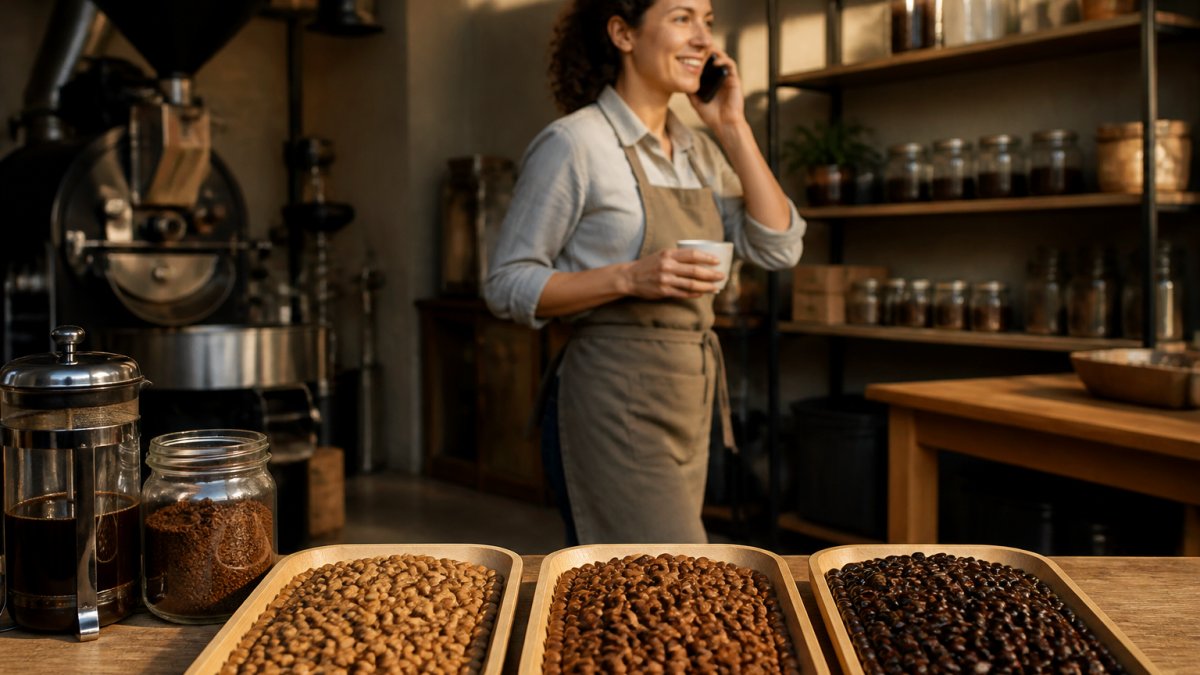
What Happens During Roasting
Light roasts spend the least time in the roaster and retain more of the bean's original acids. Medium roasts spend longer, allowing some acid compounds to break down. Dark roasts, often called French roast or espresso roast, spend the most time exposed to heat, which significantly reduces certain acid compounds.

One key compound that changes during roasting is chlorogenic acid. This naturally occurring acid in coffee beans decreases as roasting time increases. A dark roast contains substantially less chlorogenic acid than a light roast (Quantification of Caffeine and Chlorogenic Acid in Green and Roasted Coffee Samples Using...).
However, the roasting process also creates new compounds. One important one is N-methylpyridinium, which forms during the darker stages of roasting.
Measured pH vs. Reflux Triggers
Here's where the confusion starts. Coffee pH, a measure of how acidic the liquid is, doesn't perfectly predict whether someone will experience reflux symptoms. A dark roast may have a lower pH than a medium roast, but that doesn't guarantee it will trigger fewer symptoms in your specific case.
The reason: reflux isn't just about acidity. It's also about how coffee stimulates your stomach's acid production, how it relaxes the lower esophageal sphincter, and how caffeine affects your digestive system. A dark roast might measure less acidic while still triggering acid secretion in your stomach, the reverse can also be true.
Your personal tolerance depends on multiple factors: your stomach's sensitivity, your baseline acid production, the amount you drink, when you drink it, and what you eat with it. Two people can have completely different reactions to the same coffee.
Low Acid Coffee for Acid Reflux: What the Evidence Shows
The "low-acid coffee" market has grown significantly, with many brands claiming their dark roasts or special blends are gentler for reflux sufferers.
What we know: darker roasting does reduce certain acid compounds in coffee.
The most honest assessment: dark roast is a reasonable option to try if you're sensitive to acid, but it's not a guaranteed solution. Your individual response is what matters, not what the marketing claims.
How to Make Coffee Less Acidic for Sensitive Stomachs
If you're determined to keep coffee in your routine despite reflux concerns, several practical adjustments can reduce irritation beyond just choosing a darker roast.
Brewing Adjustments That Matter
Your brewing method significantly influences how much acid ends up in your cup. Cold brewing, for example, extracts fewer acids than hot brewing because cold water pulls fewer compounds from the grounds (Physiochemical Characteristics of Hot and Cold Brew Coffee Chemistry).
Water temperature also plays a role. Brewing at lower temperatures (around 195-205°F instead of the standard 200-210°F) can reduce acid extraction slightly. This is a minor adjustment, but combined with other changes, it adds up.
Brewing time matters too. Shorter brew times extract less acid. If you use a pour-over or French press, reducing contact time between water and grounds by just a minute can help.
Yogalatte's Smooth Medium Cold Brew Coffee is specifically formulated with chocolate, toffee, and floral tones that work well in cold brew preparation, a method that naturally reduces acid extraction while maintaining smooth flavor. At $24.99, it's designed for people seeking a smooth coffee experience.

Serving Size, Timing, and Preparation
Drink less coffee, and you'll absorb less acid and caffeine. This isn't new advice, but it's effective. A smaller cup in the morning may cause fewer symptoms than a large mug.
Timing matters too. Coffee on an empty stomach triggers more acid production than coffee with food. Eating something before or with your coffee can buffer stomach acid. Avoid drinking coffee immediately upon waking, wait 30 minutes to an hour after eating breakfast.
The way you prepare your cup also counts. Adding milk or cream can help neutralize acidity slightly. A splash of baking soda (yes, really) can raise pH, though this tastes odd to most people. Some people find that adding a pinch of sea salt reduces the bitter edge and makes coffee feel gentler on their stomach.
Coffee Brewing Methods for Acid Reflux Relief
Different brewing methods extract different amounts of acid and create different flavor profiles. If you're sensitive to reflux, method choice can be as important as roast selection.
Cold brewing is the gentlest option. Because water never heats above room temperature, fewer acids dissolve into the liquid. The tradeoff: cold brew takes 12-24 hours to prepare, though the concentrate keeps for weeks.
French Roast - Low Acid (tummy friendly) →
Pour-over brewing (using a paper filter) removes more oils and sediment than French press. The paper filter catches fine particles.
French press keeps more oils in the cup, which some people find smoother. Others find these oils harder on their stomach. Again, individual response varies.
Espresso, despite being a small serving, concentrates acids and caffeine.
For those seeking a balanced approach, Yogalatte's French Roast - Low Acid (tummy friendly) at $24.99 combines a deep dark roast with low acidity. The bold, rich flavor with bittersweet notes makes it suitable for various brewing methods.
Coffee and GERD Symptoms: Caffeine, Compounds, and Individual Tolerance
GERD symptoms triggered by coffee involve multiple mechanisms. It's not just about acidity, it's about caffeine and compounds that relax the esophageal sphincter.
Caffeine's Role in Reflux Triggers
Caffeine is a muscle relaxant. It relaxes the lower esophageal sphincter, the valve that prevents stomach acid from flowing back into your esophagus.
Dark roasts contain slightly less caffeine than light roasts because some caffeine breaks down during extended roasting.
Medium roasts fall in the middle. They have more caffeine than dark roasts but less than light roasts.
Testing Your Personal Tolerance
The only reliable way to know which roast works for you is to test it. Here's a practical protocol:
Start with your current coffee routine and track your symptoms for 3-5 days. Note timing, severity, and what you ate with the coffee. This is your baseline.
Switch to a dark roast (like Yogalatte's French Roast - Low Acid) and keep the same serving size, timing, and preparation method. Track symptoms for another 3-5 days.
If you want to test brewing method, keep the same roast and change only how you brew it. Cold brew for a week, then switch to pour-over the next week, tracking symptoms each time.
Which Roast to Choose: A Practical Decision Framework
Use this framework to decide between dark and medium roast for your reflux management:
Choose dark roast if:
- You've noticed that lighter coffees trigger more symptoms
- You're sensitive to acid taste and prefer smoother flavor
- You want to minimize acid compounds while keeping coffee in your routine
- You're willing to accept slightly lower caffeine but want bold flavor
Choose medium roast if:
- Dark roast doesn't improve your symptoms
- You prefer more acidity in taste (which doesn't always mean more reflux)
- You want a balance between flavor complexity and digestive comfort
- You're caffeine-sensitive and want to avoid the lowest-caffeine option
Skip coffee entirely if:
- Both dark and medium roasts consistently trigger symptoms
- Your reflux is severe or medically diagnosed GERD
- You've tested multiple brewing methods and roasts without relief
Yogalatte offers both options. Our French Roast - Low Acid (tummy friendly) is specifically designed with low acidity and rich flavor at $24.99. For those preferring a balanced middle ground, the Medium Blend at $24.99 offers well-balanced body and acidity.

The choice between dark roast and medium roast isn't one-size-fits-all. While dark roasting does reduce certain acid compounds, your personal response depends on caffeine sensitivity, serving size, timing, and brewing method. Start with a dark roast if you haven't tried one, but test systematically. If symptoms persist, focus on the other variables, brewing method, portion size, and when you drink coffee, before giving it up entirely. Yogalatte's curated selection of yoga-friendly coffee blends is crafted to help you find clarity and warmth in your morning ritual. Shop now to discover which roast centers your senses.
Frequently Asked Questions
Is dark roast or medium roast better for acid reflux?
Dark roast typically has lower acidity than medium roast because longer roasting breaks down chlorogenic acids. However, individual tolerance varies significantly. The key is testing your personal response rather than assuming roast level alone. Brewing method, serving size, and timing often matter more than roast choice.
How does low acid coffee for acid reflux actually work?
Low-acid coffee contains fewer compounds that stimulate acid production. Dark roasting and certain brewing methods reduce chlorogenic acids. However, 'low-acid' is marketing language, measured pH doesn't always predict symptoms. What matters is how your body responds. Test a low-acid option like French Roast and monitor your response over a week.
Can I reduce coffee acidity by changing how I brew it?
Yes. Cold brewing, shorter steep times, and filtered methods all reduce perceived acidity. Cold brew, steeped for 12-24 hours, produces smoother coffee with fewer acidic compounds. Paper filters remove more oils than metal filters. Adding milk or a small amount of baking soda can also buffer acidity. Timing matters too: drinking coffee with food rather than on an empty stomach.
Does caffeine in coffee trigger GERD symptoms?
Caffeine relaxes the lower esophageal sphincter, allowing stomach acid to reflux into the esophagus. Dark and medium roasts contain similar caffeine levels. If caffeine is your main trigger, consider decaffeinated options or limiting intake to one cup with food early in the day. Test your tolerance by tracking when symptoms occur after drinking.