
Last Updated: October 23, 2026
Quick Summary
To brew low acid coffee, start by selecting dark roasts or single-origin beans from regions like Sumatra or Brazil, then use cold brew with a 1:4 ratio steeped 12-24 hours or a French press brewed for four minutes at 195-205°F. Water temperature, grind size, and steep time work together to control extraction and reduce harsh, acidic compounds.
- Dark roasts feel smoother because longer roasting breaks down acids and creates mellow flavor notes.
- Cold brew steeps coarse grounds in cold water for 12-24 hours, extracting smooth flavors while leaving behind harsher compounds.
- Use a 1:4 coffee-to-water ratio for cold brew or 1:16 for French press to control strength and perceived acidity.
- Water temperature should stay between 195-200°F for hot brewing; temperatures above 205°F over-extract and increase acidity.
- Whole beans stay fresher longer than pre-ground coffee; use them within two to three weeks of the roast date.
Table of Contents
- Understanding Acidity in Coffee: Perceived vs. Measured
- How to Make Coffee Less Acidic: Bean Selection and Roast Level
- Low-Acid Coffee Brewing Methods: Cold Brew and French Press
- Coffee-to-Water Ratio for Cold Brew and Hot Methods
- Water Temperature, Grind Size, and Steep Time
- Best Coffee for Sensitive Stomachs: Choosing the Right Beans
- Troubleshooting: Why Your Coffee Still Tastes Acidic
- Storage and Food Safety for Low-Acid Coffee
- Frequently Asked Questions
Understanding Acidity in Coffee: Perceived vs. Measured
Coffee acidity isn't always what it seems. When you taste a cup that feels smooth and gentle on your stomach, you're experiencing perceived acidity, the brightness and complexity you sense on your tongue. But the actual chemical acidity, measured by pH, is different.
Researchers have found that coffee acids fall into two main categories: organic acids and chlorogenic acids. These compounds create the flavor notes you enjoy, but they can also trigger digestive discomfort for sensitive stomachs. The key insight is this: brew low acid coffee by understanding that smoothness on the palate doesn't always mean low chemical acidity.

A common misconception is that brewing method alone determines whether your coffee will be gentle on your stomach. The truth is more nuanced.
At Yogalatte, we focus on both sides of this equation. We select beans and roast profiles designed to create naturally smoother cups, then pair them with brewing techniques that honor that work. Understanding this distinction helps you choose the right approach for your body and your morning ritual.
How to Make Coffee Less Acidic: Bean Selection and Roast Level
The first step to brewing low acid coffee starts before water ever touches the grounds. Your bean choice and roast level set the foundation.
Dark roasts tend to feel smoother because the longer roasting process breaks down certain acids and creates bittersweet, mellow flavor notes.
Single-origin coffees from specific regions often have naturally lower perceived acidity:
- Indonesian coffees (especially Sumatra) offer earthy, syrupy bodies
- Brazilian coffees deliver smooth, chocolatey notes
- Central American coffees provide balanced, mellow profiles
Whole beans stay fresher longer than pre-ground coffee. When you grind just before brewing, you preserve more of the coffee's natural oils and flavor compounds.
Look for beans labeled "low acid" or "smooth roast." If you have a sensitive stomach, ask your roaster about their process. The right bean selection can reduce digestive discomfort before you ever brew a cup.
Low-Acid Coffee Brewing Methods: Cold Brew and French Press
Two brewing methods stand out for creating smooth, gentle coffee: cold brew and French press. Both extract flavors differently than hot water methods, resulting in cups that feel easier on sensitive stomachs.
Cold Brew: 12-24 Hour Steeping
Cold brew is the gentlest brewing method available. Instead of using hot water, you steep coarse grounds in room-temperature or cold water overnight. This slow extraction pulls out smooth flavors while leaving behind harsher compounds.
Here's how to make cold brew:
- Use a clean glass jar or cold brew maker
- Add coarse grounds and cold water at a 1:4 ratio (see the ratio section below for details)
- Stir gently to saturate all grounds
- Cover and let steep for 12-24 hours at room temperature
- Strain through a fine filter or cheesecloth
- Dilute the concentrate with water or milk before serving
The longer steeping time, 12 to 24 hours, allows full saturation without over-extraction. You'll end up with a smooth concentrate that tastes rich and mellow. Many people find cold brew easier to digest.
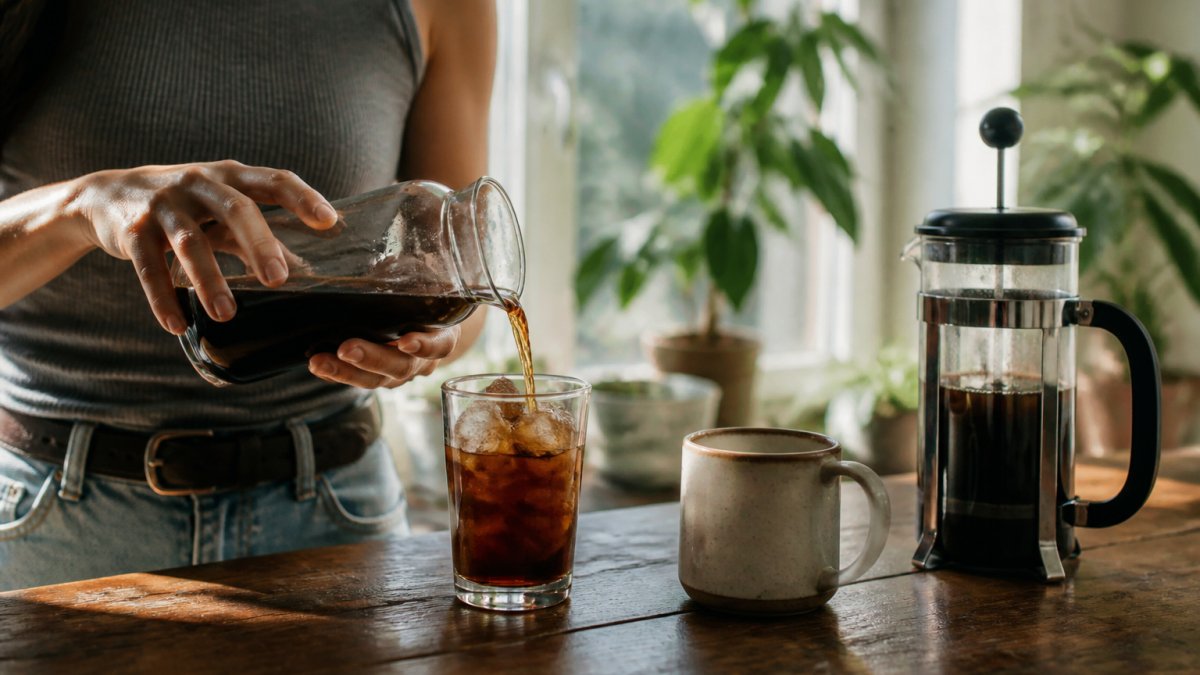
French Press: Four-Minute Brew
A French press brews hot coffee but does so gently. The immersion method (grounds steeping in hot water) extracts flavors evenly without the harshness of drip or pour-over methods.
Steps for French press brewing:
- Heat water to 195-205°F (slightly below boiling)
- Add medium-coarse grounds to the press
- Pour hot water over grounds and let them bloom for 30 seconds
- Stir gently and steep for four minutes total
- Press the plunger down slowly and pour immediately
The four-minute brew time creates a balanced extraction. Too short, and you'll under-extract. Too long, and you risk over-extraction, which brings out harsher, more acidic notes. A French press gives you control over these variables, making it ideal for dialing in the smoothness you want.
Coffee-to-Water Ratio for Cold Brew and Hot Methods
The ratio of coffee to water directly affects strength, flavor, and perceived acidity. Getting this right is essential for how to brew low acid coffee consistently.
For cold brew:
- Use a 1:4 ratio (one part grounds to four parts water)
- Example: 1 cup of coarse grounds to 4 cups of cold water
- This creates a concentrate you dilute before serving
- A stronger concentrate (1:3) can be diluted more; a weaker one (1:5) tastes lighter
For French press:
- Use a 1:16 ratio (one part grounds to 16 parts water)
- Example: 0.5 ounces of grounds to 8 ounces of water
- This produces a full-bodied cup without over-extraction
For other hot methods (pour-over, AeroPress):
- Start with 1:15 or 1:17 ratio
- Adjust based on how the cup tastes
- A stronger ratio pulls more flavor and can intensify perceived acidity
- A weaker ratio produces a lighter cup
Measure by weight if possible (using a kitchen scale). Volume measurements work but are less precise. A slightly weaker ratio often feels smoother and gentler on sensitive stomachs because you're extracting less total acid from the grounds.
Water Temperature, Grind Size, and Steep Time
Three variables work together to control extraction: water temperature, grind size, and how long grounds steep. Mastering these turns brewing low acid coffee from guesswork into a repeatable ritual.
Water temperature matters for hot brewing:
- 195-200°F extracts smoothly without pulling harsh compounds
- 205°F or hotter can over-extract and increase perceived acidity
- Use a thermometer or let boiled water cool for 30 seconds before pouring
- Cooler water (under 195°F) under-extracts and tastes thin or sour
Grind size controls extraction speed:
French Roast - Low Acid (tummy friendly) →
- Coarse grind for cold brew (like sea salt) slows extraction
- Medium-coarse for French press allows even saturation
- Fine grind for espresso or pour-over extracts quickly
- Finer grinds extract more compounds faster, so they risk over-extraction with longer steep times
- Coarser grinds need longer contact time to pull out flavors
Steep or brew time varies by method:
- Cold brew: 12-24 hours
- French press: 4 minutes
- Pour-over: 2-4 minutes
- AeroPress: 1-2 minutes
Start with the recommended times. If your cup tastes sharp or acidic, reduce brew time by 30 seconds. If it tastes thin or weak, increase time slightly. Small adjustments make a big difference.
Best Coffee for Sensitive Stomachs: Choosing the Right Beans
If you have a sensitive stomach, the right bean selection can change everything. Look for coffees with naturally lower acidity and smoother flavor profiles.
Dark roasts are gentler than light roasts. The extended roasting process mellows the acidity and creates bittersweet, rich notes.
Single-origin coffees from certain regions tend to feel easier on sensitive stomachs:
- Sumatra offers earthy, syrupy body with minimal sharpness
- Brazil provides smooth, chocolatey notes
- Peru delivers caramel and citrus without harshness
Medium roasts can work too, especially if sourced from low-acid origins. Yogalatte's Brazil Santos, a medium roast with an elegant, smooth cup and cocoa notes, shows that roast level isn't the only factor.

Decaf can be an option for those sensitive to caffeine. Yogalatte's Peru Decaf uses the Swiss Water Process, which removes caffeine while preserving the smooth, caramel-forward flavor profile.
The key is experimenting. Try different origins and roast levels. Notice which ones feel smoothest on your stomach and taste best to your palate. Your ideal coffee is personal.
Troubleshooting: Why Your Coffee Still Tastes Acidic
You've selected quality beans, chosen the right brewing method, and dialed in your ratios.
Your brew time is too long. If your coffee tastes bitter and harsh, you've likely over-extracted.
Your water is too hot. Water above 205°F over-extracts quickly. Use a thermometer and aim for 195-200°F.
Your beans are stale. Old coffee tastes more acidic and bitter.
You're using the wrong origin. Some coffees are naturally more acidic than others.
You're not filtering properly. Sediment left in your cup can taste gritty and acidic.
Test one variable at a time. Change your brew time, then taste.
Storage and Food Safety for Low-Acid Coffee
How you store your coffee affects its flavor and shelf life. Proper storage keeps your beans fresh and your brewed coffee safe.
Whole beans stay fresh longest:
- Store in an airtight container
- Keep away from light, heat, and moisture
- Room temperature is fine; refrigeration isn't necessary
- Use within two to three weeks of the roast date
- Stale beans taste more acidic and bitter
Ground coffee loses freshness faster:
- Grind only what you need, just before brewing
- If you must store grounds, use an airtight container
- Consume within one week for best flavor
Brewed cold brew concentrate:
- Keeps for up to two weeks in the refrigerator
- Store in a sealed glass jar
- Label with the brew date
- Dilute with water or milk before serving
Hot brewed coffee:
- Drink immediately for best flavor
- If you must store it, refrigerate in an airtight container
- Consume within 24 hours
- Reheating can intensify acidic notes; cold brew or iced versions taste smoother
Food safety basics:
- Use clean equipment every time you brew
- Wash your French press, cold brew maker, or filters thoroughly
- Rinse with hot water after each use
- Store equipment in a dry place
- Replace filters regularly if using disposable ones
Fresh, properly stored coffee tastes better. The ritual of brewing with quality beans and clean equipment becomes part of the mindful morning you're seeking.
Brewing smooth, low-acid coffee is a skill that improves with practice. The methods work, but they require attention to detail, the right beans, the right ratios, the right temperature. At Yogalatte, we've crafted our French Roast, Low Acid and Brazil Santos specifically to support this ritual. Both are designed with precision and respect for coffee's heritage, offering balanced flavor with a rich yet smooth taste.
Frequently Asked Questions
Does cold brew have less acidity than hot coffee?
Cold brew steeps grounds in cold water for 12-24 hours, extracting fewer acids than hot brewing. However, the difference between perceived smoothness and measured acidity matters: cold brew may taste less bitter without necessarily meeting a strict low-acid threshold. Measured acidity depends on the beans themselves, not the method alone. Taste is often a better guide than assumptions about brewing method.
What is the best low-acid coffee for sensitive stomachs?
Dark roasts and beans grown at higher altitudes tend to produce smoother cups for sensitive stomachs. Yogalatte's French Roast, Low Acid ($24.99) is specifically formulated as tummy-friendly, offering a bold, rich flavor with low acidity. Single-origin options like Sumatra and Brazil Santos also provide smooth, balanced profiles. The key is experimenting with roast level and bean origin, then pairing your choice with a brewing method that suits your stomach, such as cold brew or French press.
How do I know if my coffee is actually low acid?
Taste is your most reliable guide: low-acid coffee should feel smooth and mellow on your palate without a sharp or sour finish. If your stomach feels fine after drinking it, that's a strong signal. Measured pH requires a pH meter, which most home brewers don't have. Focus on brewing method, grind size, steep time, and water temperature, these variables matter more than the name 'low-acid' on a bag. Start with a dark roast and cold brew method, then adjust based on how your stomach responds.
Can I make regular coffee less acidic by changing how I brew it?
Yes, but only to a degree. Brewing method alone does not determine whether coffee is truly low-acid, the beans themselves matter most. That said, cold brewing, using a coarse grind, lower water temperatures (around 195-200°F for hot methods), and shorter steep times all reduce extraction of bitter compounds and can make the cup taste smoother. For the best results, combine a naturally lower-acid bean (like a dark roast) with a gentler brewing method like French press or cold brew.
