
Last Updated: October 26, 2026
Quick Summary
Coffee storage means protecting roasted beans from oxygen, light, heat, and moisture, which are all closer than you think in a small apartment. Keep beans in an opaque, airtight container sized to two to three weeks of use, in the coolest, darkest cabinet away from the stove, oven, and dishwasher.
- Whole beans stay at their best for about two to four weeks after the roast date, and ground coffee goes flat within days.
- Match container size to your habit: a single daily cup drinker uses roughly 10 to 12 ounces of beans a month.
- A standard upper cabinet shelf is about 10 to 12 inches deep, so a canister taller than 9 inches may not clear it.
- Freeze coffee only when storing more than you will drink in two to three weeks, split into portions you use in one go.
- Never store coffee in the fridge or its door, where moisture, odors, and temperature swings creep in.
Table of Contents
- Why Coffee Storage Fails in Small Apartments
- How Long Does Coffee Stay Fresh Before It Turns Flat
- The Best Coffee Storage Containers for Tight Counters
- How to Store Ground Coffee Without Losing Flavor
- Small Kitchen Coffee Storage Ideas That Use Vertical Space
- Fridge, Freezer, or Pantry: Where Coffee Actually Belongs
- Renter-Friendly Storage for Dorms and Shared Kitchens
- Building Your Yogalatte Morning Ritual in a Small Space
- Frequently Asked Questions
Why Coffee Storage Fails in Small Apartments
Small kitchens are where good coffee goes to die. Counter space runs out fast, so bags get shoved next to the stove. Steam from the kettle drifts over an open bag.
Coffee storage is the practice of protecting roasted beans from four enemies: oxygen, light, heat, and moisture. In a small apartment, all four are closer than you think. The fix is not more space. It is a better setup.
Below, we walk through the seven storage mistakes that flatten beans fastest, plus the compact fixes that actually fit a tight kitchen.
How Long Does Coffee Stay Fresh Before It Turns Flat
Coffee stays at its best for about two to four weeks after the roast date, and it declines steadily after that. Whole beans hold their flavor longer than ground coffee because less surface area touches the air. Once ground, coffee can go flat within days.
The clock starts at roasting, not at purchase. A bag with no roast date tells you nothing, so look for one before you buy. Store beans in an airtight container away from heat, and you protect most of that window.
Here is the rough timeline most roasters work with:
| Format | Peak Freshness | Starts Tasting Flat |
|---|---|---|
| Whole beans, sealed | 2-4 weeks after roast | 6-8 weeks |
| Ground coffee, sealed | 1-2 weeks after roast | 3-4 weeks |
| Beans in an open bag | A few days | 1-2 weeks |
The Best Coffee Storage Containers for Tight Counters
The best coffee storage containers are opaque, airtight, and sized to your weekly use. That combination blocks light and oxygen while keeping the container small enough to fit a narrow shelf or cabinet. The mistake most small-apartment setups make is buying one big canister that holds a month of beans, then opening it twice a day. Every open is a fresh dose of oxygen, and a big container means more air space above the beans each time you scoop.
Airtight Jars, Tins, and Bags Compared
- Ceramic canisters with a silicone gasket: block light completely and look good on an open shelf. Best for beans you finish within a month. Heavier than metal, so measure your shelf depth before buying.
- Stainless steel tins: block light and resist dents. A solid pick for small kitchens with limited shelf height, and the most forgiving option on a high-traffic shelf. Look for a tin with a gasket and a clamp or screw lid, not a friction-fit lid.
- Glass jars with a clamp lid: good seals, but clear glass lets light in. Keep them inside a cabinet, not on the counter. A clear jar on an open shelf is the most common storage mistake we see in apartment kitchens.
Sizing a Container to Your Coffee Consumption
A container that holds two months of beans means you open it dozens of times before it empties. Match the size to what you drink in two to three weeks. The math is simple: a standard dose is about 0.35 to 0.4 ounces of ground coffee per cup, so a single daily cup drinker uses roughly 10 to 12 ounces of beans a month.
Use this rough guide to pick a container:
| Daily cups (per household) | Beans per month (approx.) | Container size to buy |
|---|---|---|
| 1 cup | 10-12 oz | 8-12 oz canister |
| 2 cups | 20-24 oz | 1 lb canister |
| 3-4 cups | 30-48 oz | 1-1.5 lb canister, refill weekly |
If you are deciding how much to buy and store, our guide on whether a coffee subscription box is worth it can help you match order size to your routine. A subscription that ships a half pound every two weeks often fits a small canister better than a bulk bag that sits open for a month.
Fitting the Container to a Tight Counter
Measure before you buy. A standard upper cabinet shelf is about 10 to 12 inches deep and 10 to 12 inches tall, so a canister taller than 9 inches may not clear the shelf above it. Narrow counters often work better with a tall, slim tin than a wide jar. If your only free space is a 6-inch gap beside the fridge, a square steel tin uses that gap better than a round jar that wastes the corners.
How to Store Ground Coffee Without Losing Flavor
Ground coffee loses flavor faster than whole beans, so the rules get stricter. Store it in a small airtight container, keep it out of the light, and buy only what you will use in a week or two. Grinding at home right before brewing is the single biggest upgrade you can make.
If you must buy pre-ground, follow these steps:
- Transfer it from the bag into a small airtight container the day you open it.
- Press out as much air as possible before sealing.
- Keep the container in a dark cabinet, not on the counter.
- Buy smaller bags more often instead of a large bag that sits for months.
- Never store ground coffee in the fridge, where moisture and food odors creep in.
Small Kitchen Coffee Storage Ideas That Use Vertical Space
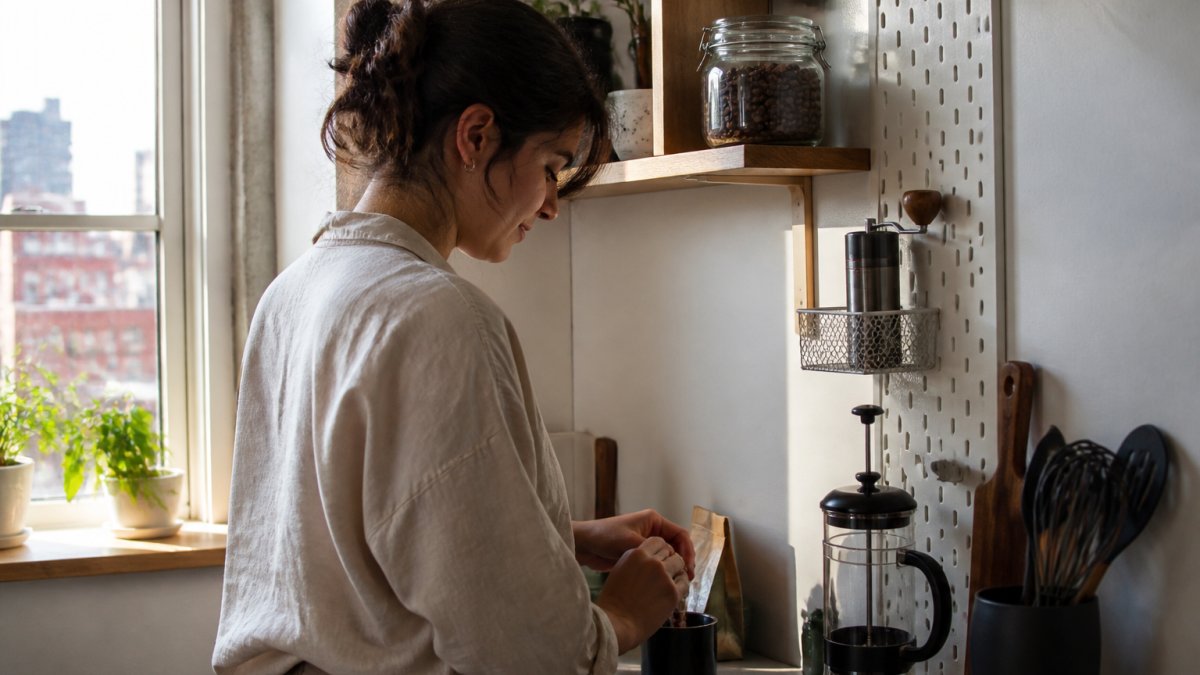
When counter space is gone, build upward. Vertical storage keeps coffee gear off the counter and away from heat. These small kitchen coffee storage ideas work in rentals because none of them require drilling or permanent changes.
- Under-shelf baskets: clip a small basket under an upper cabinet to hold filters, a scoop, and a hand grinder.
- A narrow spice rack: repurpose one for coffee bags and small canisters. It keeps them dark and off the counter.
- Pegboard with hooks: a leaning pegboard holds a French press and mugs without a single nail.
Fridge, Freezer, or Pantry: Where Coffee Actually Belongs
The pantry wins for daily coffee. A cool, dark, dry cupboard keeps beans stable without the moisture swings of a fridge. The refrigerator is the worst spot: every open and close cycles in damp air and food smells, and coffee absorbs both.
The freezer is a different story, and this is where most advice online splits. Some sources say never freeze; others say freezing is fine. Both are partly right. Here is the decision rule that resolves it.
When Freezing Makes Sense
Freeze coffee only when you are storing more than you will drink in two to three weeks. That usually means a bulk bag, a gift, or a subscription shipment that arrived faster than you can brew it. Freezing slows the staling reactions that oxygen and time drive, so a well-sealed portion held at a steady freezer temperature stays closer to its roast-day flavor than the same beans would on a shelf.
Freeze in portions you will use in one go, not one big bag. A common pattern is to split a pound into four quarter-pound bags, press the air out, seal, and label each with the roast date. Pull one portion at a time and leave the rest frozen.
When Freezing Backfires
The freezer goes wrong in three predictable ways:
- You thaw and refreeze. Taking a bag out, opening it, and putting it back traps moisture on the beans each time. Condensation is the enemy here, not the cold.
- You open it cold. Let the sealed portion come to room temperature before opening, so condensation does not form on the beans. A quarter-pound portion typically needs 30 to 60 minutes on the counter.
- You freeze ground coffee in a loose bag. Ground coffee has more surface area and picks up freezer odors faster than whole beans. If you must freeze pre-ground, double-bag it and use it within a month.
The Pantry Setup for a Small Kitchen
For daily beans, pick the coolest, darkest cabinet you have, ideally away from the stove, the oven, and the dishwasher.
If your only cabinet is next to the stove, move the beans to a closet shelf or a closed bin in the coolest room you have. Coffee does not need to live in the kitchen. It needs to live somewhere dark, dry, and steady in temperature.
Renter-Friendly Storage for Dorms and Shared Kitchens
Shared kitchens and dorm rooms add two problems: limited personal space and roommates who move your things. The answer is a self-contained coffee kit you can carry in and out.
- Keep your beans in one sealed canister that lives in your room, not the shared cupboard.
- Use a small caddy or bin to hold your grinder, filters, and scoop together.
- Label your container so roommates leave it alone.
Building Your Yogalatte Morning Ritual in a Small Space
A good storage setup is only half the ritual. The other half is the calm ten minutes you build around the cup. Our yoga-friendly blends are roasted to a balanced, rich yet smooth taste that centers your senses, and they deserve a setup that protects that flavor from the first scoop to the last.
If you want to shape the routine itself, our mindful morning coffee ritual for busy professionals walks through a simple sequence that fits a cramped kitchen. This comparison of mindful versus standard morning routines lays out the difference. And if you want to add movement before you brew, this how-to guide for morning mindful movement shows where to begin.
Here is how we would set up a small-space ritual:
- Keep one small airtight canister of beans in a dark cabinet.
- Set your grinder and press on a single narrow shelf.
- Grind right before brewing, every time.
- Sit somewhere calm for the first few sips, even if it is just a chair by the window.
Frequently Asked Questions
Will coffee stay fresh in a Ziploc bag?
A standard zip-top bag slows staleness but does not stop it. Thin plastic lets oxygen through over time and does nothing against light, so beans left in a bag on an open shelf fade faster than beans in an airtight container kept in a dark cupboard. If a bag is all you have, squeeze out the air, seal it fully, and place it inside a closed tin or opaque box. Move to a proper airtight container with a gasket as soon as you can.
Is it better to store coffee beans in the fridge or freezer?
The pantry wins for daily use. A fridge exposes beans to moisture and food odors every time the door opens, and condensation forms on cold beans. The freezer works for long-term storage if you portion beans into small airtight containers, let them come to room temperature before opening, and never refreeze. For a bag you finish within a few weeks, a cool, dark cupboard is the simplest and safest choice for coffee storage.
How should you store ground coffee in a small apartment?
Ground coffee loses aroma faster than whole beans because more surface area meets oxygen. Keep it in a small airtight container in a dark cupboard, buy only what you will use in about two weeks, and skip the fridge. If counter space is tight, a clip-on basket under a shelf or a narrow tin on a spice rack keeps the container off the counter while staying cool and out of sunlight.
What is the 15-15-15 coffee rule?
The 15-15-15 rule is a simple freshness guideline: green coffee keeps for about 15 months, roasted whole beans for about 15 weeks, and ground coffee for about 15 days. Treat the numbers as rough ceilings, not guarantees. Storage conditions shift them a lot. Beans in an airtight container in a cool, dark place hold their flavor far longer than beans left open in a warm kitchen, and ground coffee fades quickest of all.
Your beans lose flavor to air, light, and heat long before you notice. Build a compact setup that blocks all three, and every cup tastes closer to the day it was roasted. Yogalatte roasts balanced, smooth blends designed for a mindful morning, with delicate roast notes that brighten your day and a flavor built to center your senses. Shop now with Yogalatte and give your morning ritual the coffee it deserves.
